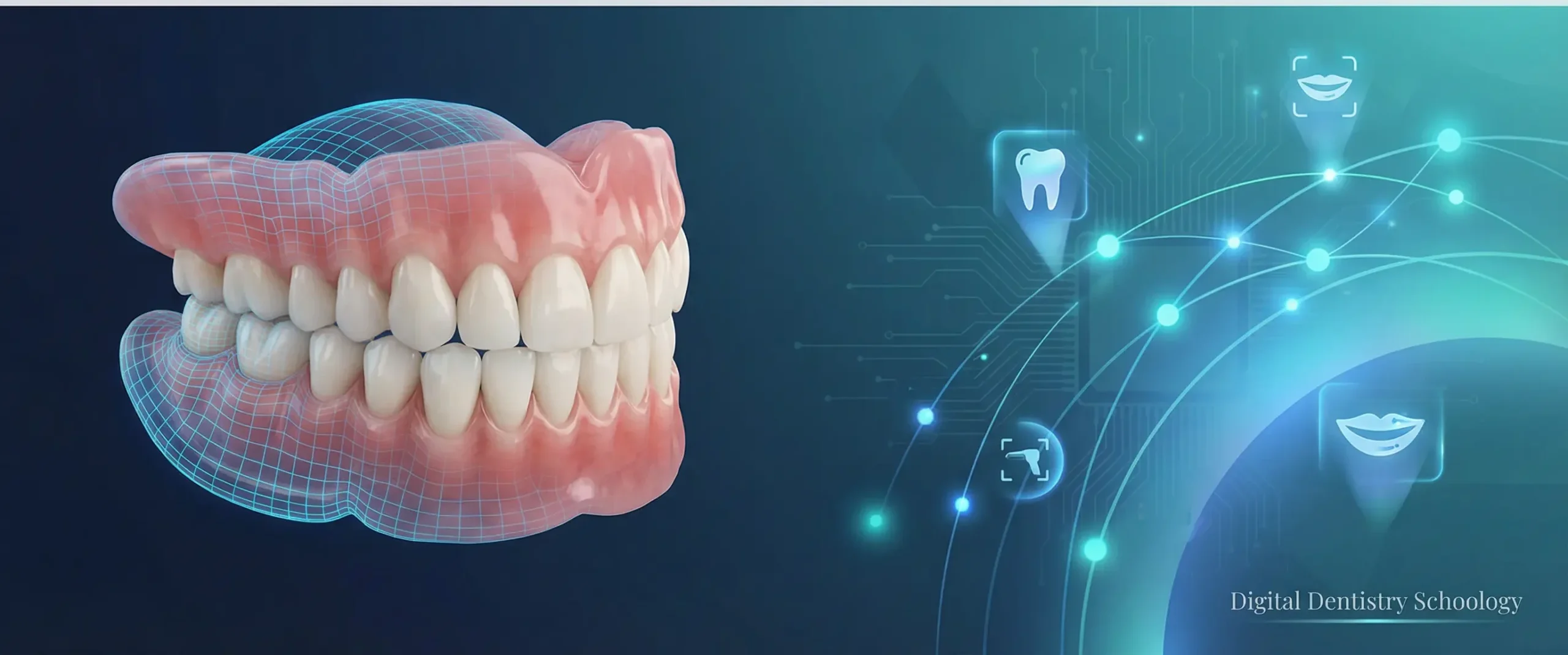
- Explore the latest advancements in face scanning and digital smile design (DSD), including 3D facial scanning, AI-driven smile simulations, and integration with CAD/CAM technology.
- Keywords: Face Scanning in Dentistry, Digital Smile Design, 3D Facial Scanning, AI Smile Simulation, CAD/CAM Aesthetic Dentistry
Abstract
Face scanning and Digital Smile Design (DSD) have revolutionized aesthetic and restorative dentistry, offering high-precision, patient-specific treatment planning. 3D facial scanning technology provides detailed facial symmetry analysis, ensuring that restorations harmonize with the patient’s unique anatomy. This article explores cutting-edge techniques, software innovations, and clinical applications of face scanning and DSD. Additionally, we review the benefits, limitations, and future directions of these technologies in modern dental practice.
Introduction
Traditional smile design relied on 2D imaging, manual wax-ups, and subjective aesthetic judgments. While effective, these methods often lacked predictability and precision. The introduction of 3D face scanning and Digital Smile Design (DSD) has significantly enhanced the ability to create customized, natural-looking restorations by integrating facial proportions, dynamic expressions, and occlusal harmony. This technology ensures that smile makeovers not only look aesthetically pleasing but also function optimally.
A. Clinical and Technical Overview
1. 3D Face Scanning Applications in Dentistry
A. What is 3D Face Scanning?
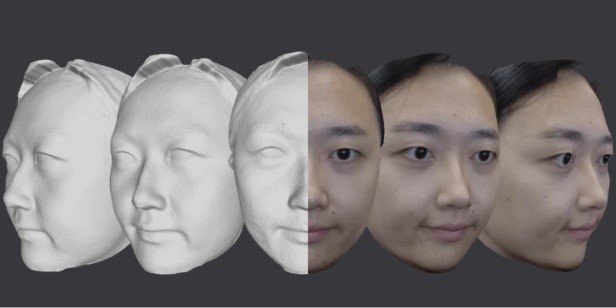
- Assess facial symmetry and soft tissue dynamics.
- Digitally superimpose prosthetic designs, veneers, or orthodontic treatments.
- Improve communication between patients and dental teams through visual simulations.
Techniques & Technologies for High-Resolution Facial Scanning in Dentistry
High-resolution 3D facial scanning has become an essential tool in modern dentistry, particularly in cosmetic, prosthetic, and orthodontic treatments. It enables accurate digital impressions of facial structures, allowing clinicians to integrate soft tissue, occlusion, and skeletal data into comprehensive treatment plans.
This section explores advanced techniques and cutting-edge technologies that enhance the accuracy and efficiency of 3D facial scanning in dentistry.
2. Techniques for High-Resolution 3D Facial Scanning
A. Structured Light Scanning
How It Works:
- Uses a projected light pattern onto the face, which deforms based on facial contours.
- A camera captures these deformations, creating a high-precision 3D facial map.
Advantages:
✔ High accuracy (sub-millimeter precision)
✔ Fast scanning time (within seconds)
✔ Non-invasive, no radiation exposure
✔ Captures fine details of soft tissue, facial symmetry, and expressions
Examples of Structured Light Scanners:
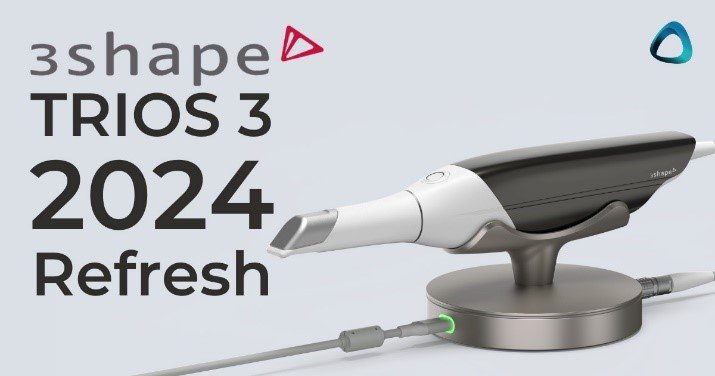
- 3Shape TRIOS Face Scanner – High-speed facial capture for digital smile design.
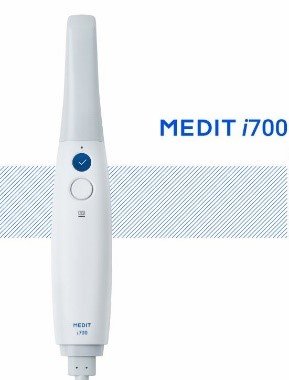
- Medit i700 Face Scanner – Provides detailed skin texture and contour mapping.
B. Photogrammetry-Based 3D Scanning
How It Works:
- Captures multiple high-resolution 2D images from different angles.
- AI-powered algorithms combine these images into a 3D model.
Advantages:
✔ Requires only a standard camera or smartphone
✔ Cost-effective compared to laser and structured light scanners
✔ Generates a realistic, color-accurate 3D model
Examples of Photogrammetry-Based Face Scanning:
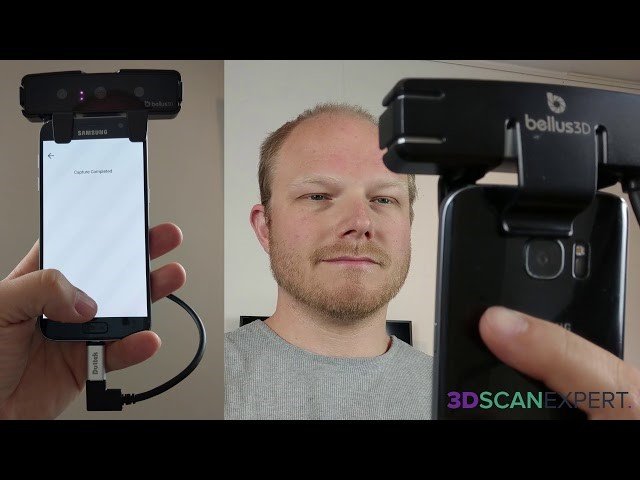
- Bellus3D Face Camera Pro – AI-driven facial reconstruction used in digital smile design.
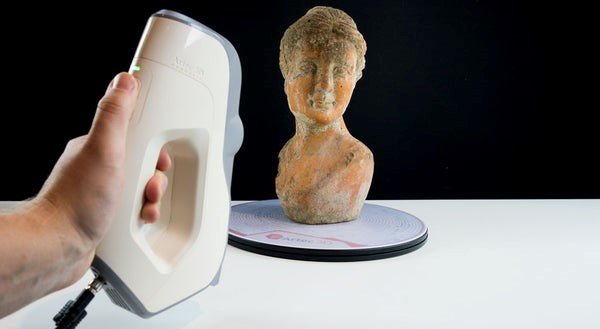
C. Laser-Based 3D Facial Scanning
How It Works:
- Uses laser beams to capture surface contours and depths.
- Provides high-definition models with accuracies of up to 10 microns.
Advantages:
✔ Ideal for detailed soft-tissue analysis
✔ High level of depth accuracy and surface smoothness
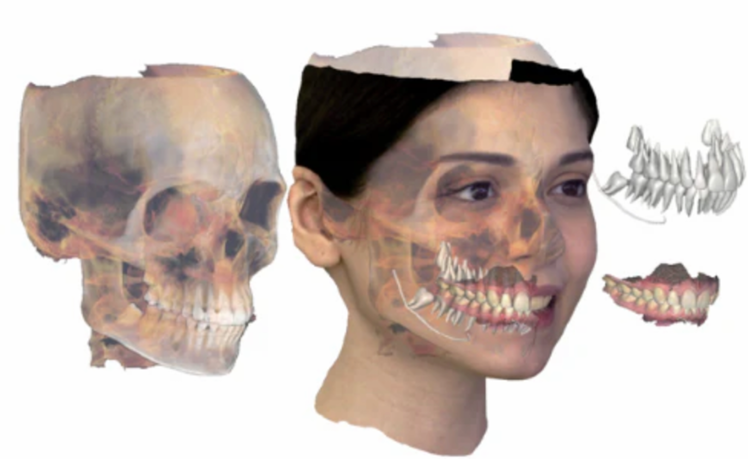
✔ Can be integrated with CBCT scans for a complete facial model
Examples of Laser-Based Scanners:
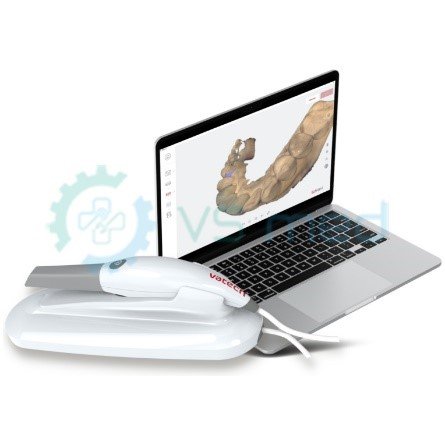
- Artec Eva 3D Scanner – Provides full-face and dental arch imaging.
- Vatech EzScan 3D – Captures both intraoral and extraoral data.
D. Cone Beam Computed Tomography (CBCT) & Hybrid 3D Imaging
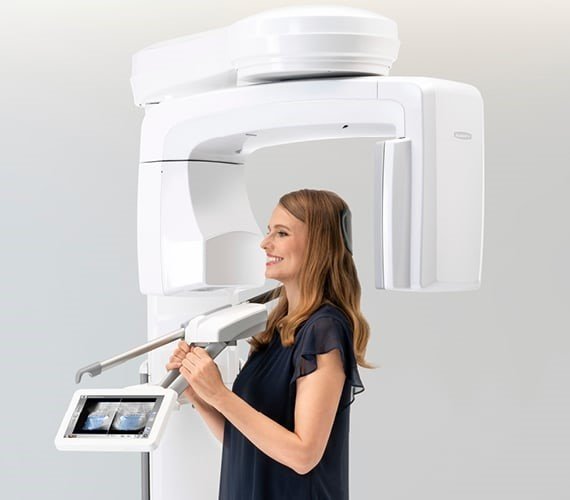
How It Works:
- Combines CBCT (bone structure) with 3D face scanning (soft tissue) to create a comprehensive craniofacial model.
- Useful in implant planning, orthodontics, and orthognathic surgery.
Advantages:
✔ Provides detailed skeletal and soft tissue integration
✔ Improves implant placement accuracy
✔ Enhances orthognathic surgery planning
Examples of CBCT with 3D Facial Scanning:
- Planmeca ProFace CBCT – Merges facial scans with bone structure data for full-mouth rehabilitation.
- Carestream CS 9300 – Offers simultaneous bone and soft tissue scanning.
3. Comparison of High-Resolution 3D Scanning Techniques
| Technique | Accuracy | Best For | Key Feature |
| Structured Light Scanning | 0.1mm precision | Digital smile design, cosmetic dentistry | Captures fine soft-tissue details |
| Photogrammetry-Based Scanning | 0.3mm precision | Orthodontics, DSD | Cost-effective, color-accurate 3D models |
| Laser-Based Scanning | Up to 10 microns | Prosthetics, full-mouth reconstructions | Highest soft-tissue detail |
| CBCT & Hybrid 3D Imaging | Bone: 75μm / Soft Tissue: 300μm | Implants, orthognathic surgery | Combines bone & soft tissue data |
Facial Scanners for 3D Treatment Planning
1. Ray Face Scanner
- High-quality scans
- Multiple cameras
- Excellent precision
Cons:
- Expensive
- May not be cost-effective for all clinicians
Verdict:
A premium scanner from Korea that provides high scan quality. However, its affordability may be a concern for some practitioners.
2. Metis Smile (Shining Company)
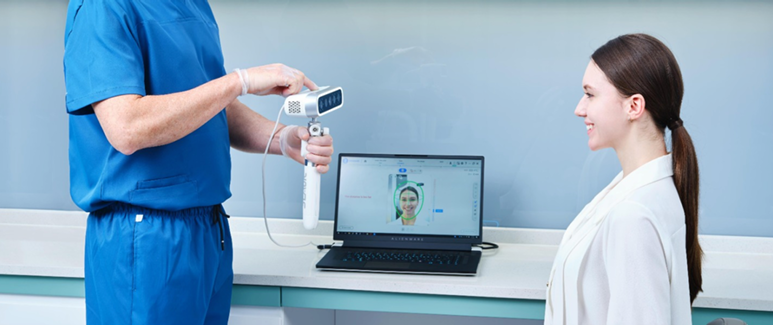
- More affordable than Ray Face
Cons:
- Limited long-term performance data
Verdict:
A suitable alternative to Ray Face for clinicians looking for a balance between cost and functionality.
3. Qlone Dental App (iPhone/iPad-based scanning)
- Cost-effective ($200 per year)
- Cloud storage for easy access
- User-friendly
Cons:
- Takes 40 seconds for data acquisition, which may slow down workflow
Verdict:
A viable budget-friendly option, particularly for beginners or clinicians looking for a simple face scanning solution. It allows assistants to get started without extensive training or expensive hardware.
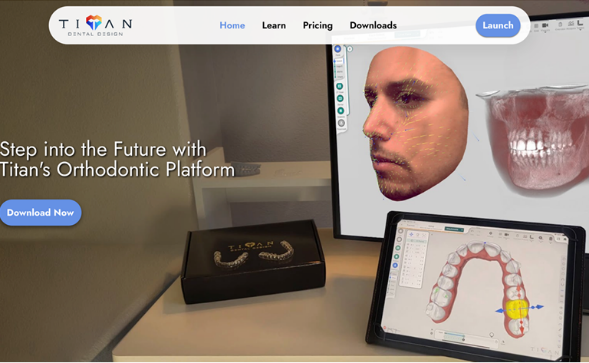
4. Titan Dental Design (iPhone/iPad-based scanning)
- Fast data acquisition, especially when used with an iPad 10 (scan time under three seconds)
- Designed specifically for integration with Titan orthodontic aligners
Cons:
- Image quality is not very sharp, particularly for dentition scans Verdict:
A practical choice for orthodontic assessments but not recommended for high-precision smile design.
Digital Smile Design Software Options
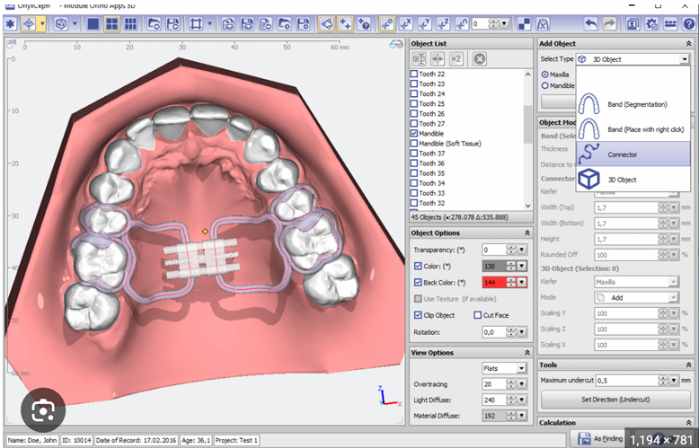
1. OnyxCeph
Cons:
- Steep learning curve
- Requires significant clinician involvement
Verdict:
A powerful tool for advanced users willing to invest time in training.
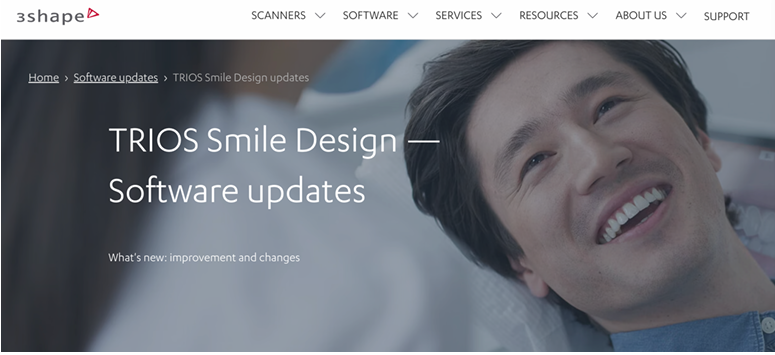
2. 3Shape:
Pros:
- Integrates with both orthodontic and prosthodontic workflows
- Supports facial scans for enhanced smile design
Cons:
- Requires substantial manual manipulation
Verdict:
A comprehensive solution for digital smile design, though it may not be the best choice for beginners due to its complexity.
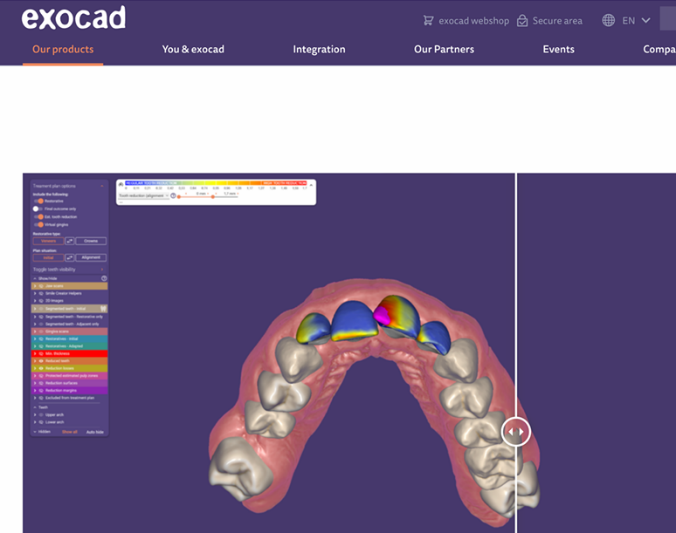
3. Exocad (New Orthodontic Module)
- Comprehensive prosthodontic tools
- Recently introduced orthodontic movement software
Cons:
- Unclear whether facial scans can be fully integrated
Verdict:
A software worth exploring for complex rehabilitations involving tooth movement and prosthodontics. The orthodontic module is relatively new and requires further evaluation regarding its compatibility with facial scanning technology.
4. Titan Dental Design (Free App for Orthodontics)
Pros:
- Free to use
- Seamless integration with Titan aligner software
Cons:
- Requires Titan’s proprietary workflow
- Lower scan quality compared to premium scanning solutions
Verdict:
An accessible entry-level option for orthodontists, though it may not be suitable for high-end prosthodontic applications.
Current Challenges in Facial Scanning and Digital Smile Design
Currently, no single software solution fully integrates facial scanning, orthodontic planning, and prosthodontic design. The lack of seamless integration remains a challenge for clinicians. Future developments in Application Programming Interfaces (APIs) may help close this gap, provided there is sufficient demand in the industry.
Recommended Scanners and Software Solutions
Best Overall Facial Scanner:
- Metis Smile (Shining Company) – Offers the best balance between cost and functionality.
Best Budget-Friendly Option:
- Qlone Dental (iPad 10 recommended) – Cost-effective and cloud-based, though it has a slower scanning process.
Best Comprehensive Software for Advanced Users:
- OnyxCeph or 3Shape – Both offer powerful tools but require significant training and experience to use effectively. Nemotech is another software worth considering.
Best Free Software for Orthodontics:
- Titan Dental Design – A good option for basic orthodontic assessments, though its applications remain limited.
4. Future Innovations in 3D Facial Scanning for Dentistry
🔹 AI-Powered Face Recognition for Smile Design – Predicts ideal tooth proportions based on facial harmony.
🔹 Real-Time Augmented Reality (AR) Scanning – Patients can see their new smile before treatment using AR.
🔹 Cloud-Based 3D Facial Data Sharing – Enhancing interdisciplinary collaboration among dental specialists.
C. How Facial Soft Tissue Analysis Informs Aesthetic Treatment Planning
- Facial scans enable precise soft tissue evaluation, allowing for customized veneer and implant designs.
- Helps in predicting how restorations will interact with facial expressions.
- Assists in determining optimal tooth proportions for facial harmony.
2. Digital Smile Design (DSD) & Its Role in Modern Dentistry
A. What is Digital Smile Design (DSD)?
Digital Smile Design is a computerized approach that combines 3D facial scans, AI-driven simulations, and CAD/CAM restorations to create precise, patient-specific smiles.
B. AI-Driven Smile Simulation & Workflow
- Digital Patient Imaging & Data Collection:
- High-resolution intraoral scans + 3D facial scans + CBCT data.
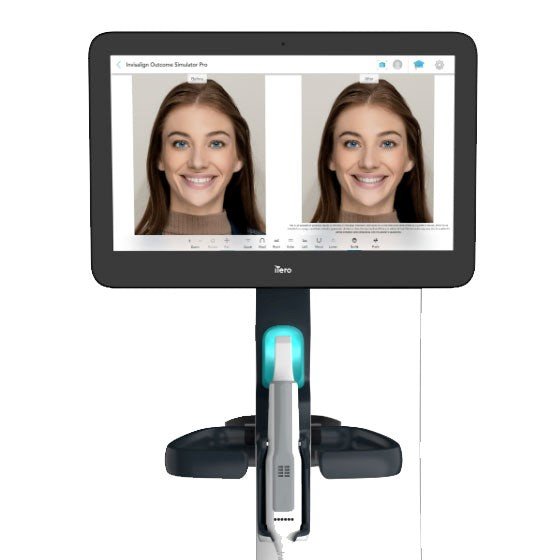
- Example scanners: iTero Element, 3Shape TRIOS, Medit i700.
- AI-Powered Smile Simulation:
- Uses facial recognition and AI algorithms to predict the ideal tooth shape, position, and proportions.
- Example software: SmileFy, 3Shape Smile Design, DSDApp.
- Virtual Smile Design & Patient Preview:
- Creates a digital mock-up to visualize the final restoration before treatment begins.
Informs Esthetic Treatment Planning
Facial soft tissue analysis plays a critical role in esthetic dentistry, ensuring that dental restorations, orthodontic treatments, and facial aesthetic procedures harmonize with the patient’s natural anatomy, expressions, and proportions. Traditional dental treatments often focused only on teeth and occlusion, but modern digital facial soft tissue analysis integrates smile dynamics, lip support, and facial symmetry, leading to more natural and patient-specific esthetic outcomes.
This section explores how soft tissue analysis is performed, its impact on treatment planning, and its role in various dental specializations.
2. Key Components of Facial Soft Tissue Analysis in Esthetic Dentistry
A. Facial Symmetry & Proportions
Understanding facial proportions is essential in designing a smile that enhances the patient’s natural features.
- Golden Proportions in Dentistry:
- The ideal smile follows the golden ratio (1.618:1) between the width of the central incisors and lateral incisors.
- Proper analysis ensures that tooth proportions and positions align with facial symmetry.
- Midline & Asymmetry Considerations:
- The dental midline should align with the facial midline for a balanced appearance.
- Facial asymmetries must be considered before veneers, crowns, and orthodontic treatments.
✔ Example:
Patients with midline discrepancies of more than 2mm often require orthodontic adjustments or restorations designed to compensate for asymmetry.
B. Lip Dynamics & Smile Aesthetics
Soft tissue analysis evaluates how the lips interact with the teeth, influencing the final esthetic result.
- Smile Line Analysis:
- The upper incisor edges should follow the curve of the lower lip for an attractive smile.
- Patients with flat smile lines may need incisal edge modifications.
- Lip Support in Prosthetic & Orthodontic Planning:
- Over-retracted anterior teeth can reduce lip fullness, making the face appear aged or sunken.
- Correct positioning of restorations and orthodontic movements can restore proper lip contour.
✔ Example:
A patient receiving full-mouth veneers had incisal length adjusted to enhance lip support and smile curvature, creating a more youthful appearance.
C. Soft Tissue Thickness & Gingival Display
The amount of gum exposure when smiling is a crucial factor in esthetic planning.
- Types of Smiles:
- High Smile Line: Excessive gum display (“gummy smile”) may require gingival contouring or Botox therapy.
- Low Smile Line: Minimal tooth exposure may require crown lengthening or orthodontic adjustments.
✔ Example:
A patient with excessive gingival display (4mm+) underwent laser gingivectomy and digital smile design to achieve better tooth-gum balance.
D. Cheek Support & Buccal Corridor Considerations
Buccal corridors are the dark spaces between the cheeks and the teeth when smiling.
- Wide buccal corridors can make a smile appear narrow and less esthetic.
- Dental restorations, orthodontic expansion, or implant-supported prostheses can enhance cheek support.
✔ Example:
A patient receiving porcelain veneers had posterior teeth slightly widened digitally, reducing buccal corridor space for a fuller, more balanced smile.
3. How Soft Tissue Analysis Impacts Various Esthetic Dental Treatments
A. Smile Makeovers & Veneer Planning
- 3D soft tissue scans ensure that veneers align with lip curvature and smile dynamics.
- AI-driven smile simulations allow patients to preview their smile before treatment.
✔ Example:
A patient requesting 6 anterior veneers had digital soft tissue mapping performed, revealing the need for minor orthodontic adjustments before veneer placement.
B. Implant Placement & Full-Arch Restorations
- Facial soft tissue analysis helps determine optimal implant positions to restore natural lip support.
- CBCT + 3D face scanning ensures proper soft tissue volume and occlusal harmony.
✔ Example:
A full-mouth implant rehabilitation case used 3D face scanning to ensure the prosthetic smile complemented facial esthetics.
C. Orthodontics & Clear Aligners
- Soft tissue evaluation helps orthodontists design smiles that enhance overall facial harmony.
- AI-based treatment simulations predict post-treatment soft tissue changes.
✔ Example:
A patient with retruded upper incisors had aligner therapy planned to improve both tooth position and lip fullness.
D. Facial Rejuvenation & Non-Surgical Smile Enhancements
- Dermal fillers, Botox, and laser treatments rely on facial soft tissue analysis to enhance perioral esthetics.
- Helps in treating gummy smiles, perioral wrinkles, and lip asymmetry.
✔ Example:
A patient with gummy smile and deep nasolabial folds had Botox + veneers, resulting in a balanced, youthful smile.
4. Future Trends in Soft Tissue Analysis for Esthetic Dentistry
🔹 AI-Driven Soft Tissue Analysis – AI will predict how smiles change with age, guiding long-term esthetic planning.
🔹 Augmented Reality (AR) Smile Previews – Patients will see real-time simulations of their smile changes before treatment.
🔹 Machine Learning-Based Occlusal & Soft Tissue Integration – Advanced algorithms will automate smile optimization based on soft tissue contours.
B. Integrating Face Scans with Digital Smile Design
Integrating Face Scans with Digital Smile Design (DSD) & Using 3D Face Data to Customize Restorations and Optimize Implant Planning
1. Introduction
The integration of 3D face scanning with Digital Smile Design (DSD) has revolutionized modern aesthetic and restorative dentistry, enabling a more precise, customized, and patient-centric approach to treatment. Unlike traditional methods that relied on 2D images and manual smile design techniques, 3D face scanning provides a comprehensive view of facial structure, soft tissue dynamics, and occlusal relationships. This allows dentists to harmonize restorations and implants with the patient’s natural facial features, smile line, and lip movement, improving both function and esthetics.
This article explores the step-by-step process of integrating face scans with DSD, how 3D face data is used to customize restorations and optimize implant planning, and the future trends in biometric analysis for personalized esthetic dentistry.
2. The Role of 3D Face Scanning in Digital Smile Design (DSD)
A. What is Digital Smile Design (DSD)?
Digital Smile Design (DSD) is a computer-assisted smile planning system that combines 3D imaging, AI-powered simulations, and CAD/CAM restorations to create natural, patient-specific smiles.
✔ Benefits of DSD:
- Enables precise treatment planning for veneers, crowns, orthodontics, and full-mouth restorations.
- Provides AI-generated smile simulations, allowing patients to visualize their new smile before treatment begins.
- Improves communication between dentists, patients, and dental technicians for better treatment predictability.
B. How Face Scanning Integrates with Digital Smile Design
The integration of face scanning with DSD enhances smile planning by aligning digital restorations with the patient’s natural facial structure. The key steps include:
1. 3D Digital Patient Imaging
- High-resolution 3D facial scans are captured using structured light scanners, photogrammetry, or CBCT imaging.
- Intraoral scanners (such as iTero, 3Shape TRIOS, or Medit i700) are used to obtain detailed digital impressions of the teeth.
- Data from CBCT scans is combined with face scans to include bone structure and occlusal relationships.
✔ Example:
A patient with an asymmetrical smile underwent 3D facial scanning and AI-driven smile analysis, which revealed the need for gum contouring and slight orthodontic adjustments before veneer placement.
2. AI-Powered Smile Simulations & Digital Mock-Ups
- AI-driven smile design software (such as 3Shape Smile Design, SmileFy, and DSDApp) analyzes the facial proportions, lip curvature, and midline alignment.
- A virtual 3D mock-up of the new smile is generated, allowing patients to preview their final restoration before treatment begins.
✔ Example:
A patient with excessive gum exposure and small teeth had an AI simulation performed, leading to digital crown lengthening and veneer design that balanced the smile with the face.
3. CAD/CAM Integration for Precise Restoration Fabrication
- The final smile design is transferred to CAD software, where veneers, crowns, or full-mouth restorations are digitally designed.
- 3D-printed prototypes (mock-ups) are created for a try-in phase, allowing for real-time adjustments before final fabrication.
- The final restorations are milled using CAD/CAM technology, ensuring high precision and esthetic integration.
✔ Example:
A patient receiving a full-arch zirconia restoration had a 3D-printed prototype tested before final milling, allowing adjustments in occlusal alignment and esthetics.
3. Using 3D Face Data to Customize Restorations
A. Aligning Dental Restorations with Facial Features
- 3D face scanning ensures that veneers, crowns, and bridges follow the natural facial anatomy, avoiding overly generic restorations.
- The smile line is customized to align with lip movements and natural expressions, preventing an artificial appearance.
✔ Example:
A patient with a worn dentition had restorations customized using 3D face data, ensuring a natural incisal edge position and balanced buccal corridors.
B. Enhancing Prosthetic Esthetics & Functionality
✔ Personalized Occlusion Adjustment:
- 3D face data allows for occlusion refinement, ensuring harmonization with the patient’s unique bite mechanics.
✔ Improving Lip & Cheek Support:
- In full-mouth reconstructions, missing teeth can cause facial collapse.
- 3D scanning helps restore proper lip and cheek support, preventing premature aging.
✔ Example:
A full-arch implant patient had restorations digitally designed to support lip volume, reducing the appearance of wrinkles.
4. Optimizing Implant Planning with 3D Face Scans
A. Pre-Surgical Analysis for Implant Placement
- Combining CBCT scans with 3D face scans allows for precise implant positioning, ensuring prosthetics align with facial symmetry.
- Prevents deviations in midline placement, leading to better esthetic and functional outcomes.
✔ Example:
A patient requiring two central implants had facial scans performed to ensure symmetry, avoiding an off-center final restoration.
B. Virtual Implant Placement & Smile Preview
- Digital implant planning software (such as NobelClinician and Blue Sky Plan) integrates 3D face data, allowing dentists to visualize the final esthetic result before surgery.
- Ensures implants are placed in harmony with the facial midline, smile arc, and soft tissue contours.
✔ Example:
A patient undergoing all-on-4 implant therapy had pre-surgical simulations performed using facial scans, optimizing implant angulation for maximal esthetic outcome.
C. Prosthetically Driven Implant Planning
- 3D face scanning helps determine the ideal implant position based on the planned restoration, rather than placing implants arbitrarily.
- Ensures that implant-supported crowns emerge naturally from the soft tissues, preventing an unnatural, elongated appearance.
✔ Example:
A patient with bone resorption in the anterior maxilla had implants planned based on 3D soft tissue analysis, ensuring a more natural emergence profile.
5. Future Trends in Face Scanning & Digital Smile Design
Integrating Face Scans with Digital Smile Design (DSD) & Using 3D Face Data to Customize Restorations and Optimize Implant Planning
1. Introduction
The integration of 3D face scanning with Digital Smile Design (DSD) has revolutionized modern aesthetic and restorative dentistry, enabling a more precise, customized, and patient-centric approach to treatment. Unlike traditional methods that relied on 2D images and manual smile design techniques, 3D face scanning provides a comprehensive view of facial structure, soft tissue dynamics, and occlusal relationships. This allows dentists to harmonize restorations and implants with the patient’s natural facial features, smile line, and lip movement, improving both function and esthetics.
This article explores the step-by-step process of integrating face scans with DSD, how 3D face data is used to customize restorations and optimize implant planning, and the future trends in biometric analysis for personalized esthetic dentistry.
2. The Role of 3D Face Scanning in Digital Smile Design (DSD)
A. What is Digital Smile Design (DSD)?
Digital Smile Design (DSD) is a computer-assisted smile planning system that combines 3D imaging, AI-powered simulations, and CAD/CAM restorations to create natural, patient-specific smiles.
✔ Benefits of DSD:
- Enables precise treatment planning for veneers, crowns, orthodontics, and full-mouth restorations.
- Provides AI-generated smile simulations, allowing patients to visualize their new smile before treatment begins.
- Improves communication between dentists, patients, and dental technicians for better treatment predictability.
B. How Face Scanning Integrates with Digital Smile Design
The integration of face scanning with DSD enhances smile planning by aligning digital restorations with the patient’s natural facial structure. The key steps include:
1. 3D Digital Patient Imaging
- High-resolution 3D facial scans are captured using structured light scanners, photogrammetry, or CBCT imaging.
- Intraoral scanners (such as iTero, 3Shape TRIOS, or Medit i700) are used to obtain detailed digital impressions of the teeth.
- Data from CBCT scans is combined with face scans to include bone structure and occlusal relationships.
✔ Example:
A patient with an asymmetrical smile underwent 3D facial scanning and AI-driven smile analysis, which revealed the need for gum contouring and slight orthodontic adjustments before veneer placement.
2. AI-Powered Smile Simulations & Digital Mock-Ups
- AI-driven smile design software (such as 3Shape Smile Design, SmileFy, and DSDApp) analyzes the facial proportions, lip curvature, and midline alignment.
- A virtual 3D mock-up of the new smile is generated, allowing patients to preview their final restoration before treatment begins.
✔ Example:
A patient with excessive gum exposure and small teeth had an AI simulation performed, leading to digital crown lengthening and veneer design that balanced the smile with the face.
3. CAD/CAM Integration for Precise Restoration Fabrication
- The final smile design is transferred to CAD software, where veneers, crowns, or full-mouth restorations are digitally designed.
- 3D-printed prototypes (mock-ups) are created for a try-in phase, allowing for real-time adjustments before final fabrication.
- The final restorations are milled using CAD/CAM technology, ensuring high precision and esthetic integration.
✔ Example:
A patient receiving a full-arch zirconia restoration had a 3D-printed prototype tested before final milling, allowing adjustments in occlusal alignment and esthetics.
3. Using 3D Face Data to Customize Restorations
A. Aligning Dental Restorations with Facial Features
- 3D face scanning ensures that veneers, crowns, and bridges follow the natural facial anatomy, avoiding overly generic restorations.
- The smile line is customized to align with lip movements and natural expressions, preventing an artificial appearance.
✔ Example:
A patient with a worn dentition had restorations customized using 3D face data, ensuring a natural incisal edge position and balanced buccal corridors.
B. Enhancing Prosthetic Esthetics & Functionality
✔ Personalized Occlusion Adjustment:
- 3D face data allows for occlusion refinement, ensuring harmonization with the patient’s unique bite mechanics.
✔ Improving Lip & Cheek Support:
- In full-mouth reconstructions, missing teeth can cause facial collapse.
- 3D scanning helps restore proper lip and cheek support, preventing premature aging.
✔ Example:
A full-arch implant patient had restorations digitally designed to support lip volume, reducing the appearance of wrinkles.
4. Optimizing Implant Planning with 3D Face Scans
A. Pre-Surgical Analysis for Implant Placement
- Combining CBCT scans with 3D face scans allows for precise implant positioning, ensuring prosthetics align with facial symmetry.
- Prevents deviations in midline placement, leading to better esthetic and functional outcomes.
✔ Example:
A patient requiring two central implants had facial scans performed to ensure symmetry, avoiding an off-center final restoration.
B. Virtual Implant Placement & Smile Preview
- Digital implant planning software (such as NobelClinician and Blue Sky Plan) integrates 3D face data, allowing dentists to visualize the final esthetic result before surgery.
- Ensures implants are placed in harmony with the facial midline, smile arc, and soft tissue contours.
✔ Example:
A patient undergoing all-on-4 implant therapy had pre-surgical simulations performed using facial scans, optimizing implant angulation for maximal esthetic outcome.
C. Prosthetically Driven Implant Planning
- 3D face scanning helps determine the ideal implant position based on the planned restoration, rather than placing implants arbitrarily.
- Ensures that implant-supported crowns emerge naturally from the soft tissues, preventing an unnatural, elongated appearance.
✔ Example:
A patient with bone resorption in the anterior maxilla had implants planned based on 3D soft tissue analysis, ensuring a more natural emergence profile.
5. Future Trends in Face Scanning & Digital Smile Design
🔹 AI-Driven Biometric Analysis – AI will predict long-term smile aging and soft tissue changes for better treatment longevity.
🔹 Augmented Reality (AR) for Smile Previews – Patients will be able to see their final smile in real-time using AR visualization.
🔹 Cloud-Based Smile Design Collaboration – Remote consultations will enable global expert input on complex cases
C. Case Studies & Clinical Applications
Case Study 1: Enhancing Full-Mouth Rehabilitation with 3D Face Scanning
- Patient: 55-year-old male with severe tooth wear.
- Technology Used: Bellus3D Face Scanner + Exocad Smile Creator.
- Outcome: Facial scans helped align digital restorations with patient’s facial proportions, achieving a natural, harmonious smile.
Case Study 2: Digital Smile Design in Cosmetic Dentistry
- Patient: 34-year-old female seeking veneer treatment.
- Technology Used: 3Shape Smile Design + AI Simulation.
- Outcome: AI-driven smile preview helped the patient visualize her new smile before treatment, increasing treatment confidence.
D. Product & Company Review
| Product | Technology | Best For | Key Feature |
| 3Shape TRIOS Face Scanner | Structured Light Scanning | Smile Design & Orthodontics | High-speed, high-accuracy 3D scans |
| Bellus3D Face Camera Pro | Photogrammetry | Facial Simulation | AI-powered facial tracking for digital smile previews |
| Planmeca ProFace CBCT | CBCT + 3D Face Scan | Implant Planning | Combines bone & soft tissue data for full-arch planning |
| Exocad Smile Creator | AI Smile Simulation | Veneers & Restorations | AI-driven smile design with CAD/CAM integration |
| SmileFy AI Smile Design | AI-Based Smile Preview | Esthetic Dentistry | Cloud-based smile design with virtual mock-ups |
Conclusion
3D face scanning and Digital Smile Design (DSD) are revolutionizing modern dentistry by enhancing aesthetic outcomes, improving treatment predictability, and increasing patient engagement. As AI-driven technologies, AR simulations, and CAD/CAM integrations advance, the future of digital smile design will continue to evolve, offering more personalized, high-precision treatment solutions. 🚀
References
- Coachman, C., Calamita, M. A., & Sesma, N. (2012). Digital Smile Design: A tool for treatment planning and communication in esthetic dentistry. Quintessence of Dental Technology, 35, 103-111.
- Zimmermann, M., & Mehl, A. (2015). Virtual smile design systems: a systematic review. International Journal of Computerized Dentistry, 18(1), 9-32.
- Jafri, Z., Ahmad, N., Sawai, M., Sultan, N., & Bhardwaj, A. (2020). Digital Smile Design-An innovative tool in aesthetic dentistry. Journal of Oral Biology and Craniofacial Research, 10(2), 194-198. PMC7193250.
- Omar, D., & Duarte, C. (2018). The application of parameters for comprehensive smile esthetics by digital smile design programs: A review of literature. The Saudi Dental Journal, 30(1), 7-12.
- Mangano, F., Gandolfi, A., Luongo, G., & Logozzo, S. (2017). Intraoral scanners in dentistry: a review of the current literature. BMC Oral Health, 17(1), 149.
3D Facial Scanning Technologies
- Amornvit, P., & Sanohkan, S. (2019). The accuracy of digital face scans obtained from 3D scanners: an in vitro study. International Journal of Dentistry, 2019, 2154846.
- Piedra-Cascón, W., Meyer, M. J., Methani, M. M., & Revilla-León, M. (2020). Accuracy (trueness and precision) of a dual-structured light facial scanner and interexaminer reliability. The Journal of Prosthetic Dentistry, 124(5), 567-574.
- Revilla-León, M., Gómez-Polo, M., Vyas, S., Barmak, B. A., Özcan, M., Att, W., & Krishnamurthy, V. R. (2022). Artificial intelligence applications in restorative dentistry: A systematic review. The Journal of Prosthetic Dentistry, 128(2), 867-875.
- Djordjevic, J., Jadallah, M., Zhurov, A. I., Toma, A. M., & Richmond, S. (2013). Three-dimensional analysis of facial shape and symmetry in twins using laser surface scanning. Orthodontics & Craniofacial Research, 16(3), 146-160.
Photogrammetry and Structured Light Scanning
- Rossini, G., Parrini, S., Castroflorio, T., Deregibus, A., & Debernardi, C. L. (2016). Diagnostic accuracy and measurement sensitivity of digital models for orthodontic purposes: A systematic review. American Journal of Orthodontics and Dentofacial Orthopedics, 149(2), 161-170.
- Salemi, S., Bernardi, S., Continenza, M. A., Cutilli, T., De Benedictis, A., & Bianchi, S. (2022). Digital dental models: Is photogrammetry an alternative to dental extraoral and intraoral scanners? Healthcare, 10(2), 294. PMC8871120.
- Gibelli, D., Dolci, C., Cappella, A., Sforza, C. (2019). Reliability of optical devices for three-dimensional facial anatomy description: a systematic review and meta-analysis. International Journal of Oral and Maxillofacial Surgery, 49(8), 1092-1106.
- Hassan, B., Greven, M., Wismeijer, D. (2017). Integrating 3D facial scanning in a digital workflow to CAD/CAM design and fabricate complete dentures for immediate total mouth rehabilitation. The Journal of Advanced Prosthodontics, 9(5), 381-386. PMC5673615.
CAD/CAM Integration and Digital Workflows
- Miyazaki, T., Hotta, Y., Kunii, J., Kuriyama, S., & Tamaki, Y. (2009). A review of dental CAD/CAM: current status and future perspectives from 20 years of experience. Dental Materials Journal, 28(1), 44-56.
- Beuer, F., Schweiger, J., & Edelhoff, D. (2008). Digital dentistry: an overview of recent developments for CAD/CAM generated restorations. British Dental Journal, 204(9), 505-511.
- Davidowitz, G., & Kotick, P. G. (2011). The use of CAD/CAM in dentistry. Dental Clinics of North America, 55(3), 559-570.
Facial Analysis and Soft Tissue Dynamics
- Ackerman, M. B., & Ackerman, J. L. (2002). Smile analysis and design in the digital era. Journal of Clinical Orthodontics, 36(4), 221-236.
- Sarver, D. M. (2001). The importance of incisor positioning in the esthetic smile: the smile arc. American Journal of Orthodontics and Dentofacial Orthopedics, 120(2), 98-111.
- Rufenacht, C. R. (1990). Fundamentals of esthetics. Chicago: Quintessence Publishing.
- Fradeani, M. (2004). Esthetic rehabilitation in fixed prosthodontics. London: Quintessence Publishing.
AI Applications in Smile Design
- Turbush, S. K., & Turkyilmaz, I. (2017). Accuracy of three different types of stereolithography surgical guide in implant placement: an in vitro study. The Journal of Prosthetic Dentistry, 117(6), 764-769.
- Takahashi, T., Gunne, J., Abramson, M., & Luthardt, R. G. (2013). Intraoral digital impression devices: a review. Dental Clinics of North America, 57(1), 77-89.
Clinical Applications and Case Studies
- Lin, W. S., Harris, B. T., Pellerito, J., & Morton, D. (2018). Fabrication of an interim complete removable dental prosthesis with an in-office digital light processing three-dimensional printer: A proof-of-concept technique. The Journal of Prosthetic Dentistry, 120(3), 331-334.
- Westland, S. (2003). Review of the CIE system of colorimetry and its use in dentistry. Journal of Esthetic and Restorative Dentistry, 15(sup1), S5-S12.
- Ahmad, I. (1998). Geometric considerations in anterior dental aesthetics: restorative principles. Practical Periodontics and Aesthetic Dentistry, 10(7), 813-822.
Facial Symmetry and Proportions
- Peck, S., & Peck, L. (1970). Selected aspects of the art and science of facial esthetics. Seminars in Orthodontics, 1(2), 105-126.
- Ricketts, R. M. (1968). Esthetics, environment, and the law of lip relation. American Journal of Orthodontics, 54(4), 272-289.
- Holdaway, R. A. (1983). A soft-tissue cephalometric analysis and its use in orthodontic treatment planning. Part I. American Journal of Orthodontics, 84(1), 1-28.
Recent Technology Reviews and Comparisons
- Pieralli, S., Kohal, R. J., Jung, R. E., Vach, K., & Spies, B. C. (2020). Clinical outcomes of zirconia dental implants: a systematic review. Journal of Dental Research, 99(1), 26-36.
- Joda, T., Zarone, F., & Ferrari, M. (2017). The complete digital workflow in fixed prosthodontics: a systematic review. BMC Oral Health, 17(1), 124.
Standards and Protocols
- International Organization for Standardization. (2012). Dentistry – CAD/CAM systems – Test methods for assessing the usability of CAD and CAM systems (ISO 14155:2012). Geneva: ISO.
- Academy of Osseointegration. (2020). 2020 Guidelines of the Academy of Osseointegration for the provision of dental implants. International Journal of Oral & Maxillofacial Implants, 35(4), 691-693.