
EMG and TENS in Dental Occlusion: Clinical Uses, Evidence and Limitations
What can a muscle recording or response to electrical stimulation tell you about a patient’s bite? Surface electromyography (sEMG) records activity from accessible masticatory muscles. Transcutaneous electrical nerve stimulation (TENS) applies electrical stimulation and has been studied for selected pain and muscle-activity outcomes. A recorded signal or a short-term response does not by itself establish a diagnosis, an ideal restorative jaw relation or durable treatment success. DC/TMD clinical framework; TENS clinical trial.
Start with the clinical question, then choose the measurement
Separate four questions: What symptoms and functional limitations does the patient report? What does the clinical examination show? What task is the instrument measuring? Would its result change a justified clinical decision? TMD assessment draws on history, examination and psychosocial factors; additional tests and imaging should follow the indication. Schiffman and colleagues.
sEMG is a task-dependent measure. Acquisition conditions, electrode placement, signal processing and the task performed affect interpretation. Neither an asymmetry nor a lower resting amplitude independently identifies TMD or proves an ideal occlusal relationship. A diagnostic-accuracy study found that resting sEMG and several jaw-tracking measurements did not adequately distinguish myofascial-pain patients from matched controls. Manfredini and colleagues; 2025 systematic review.
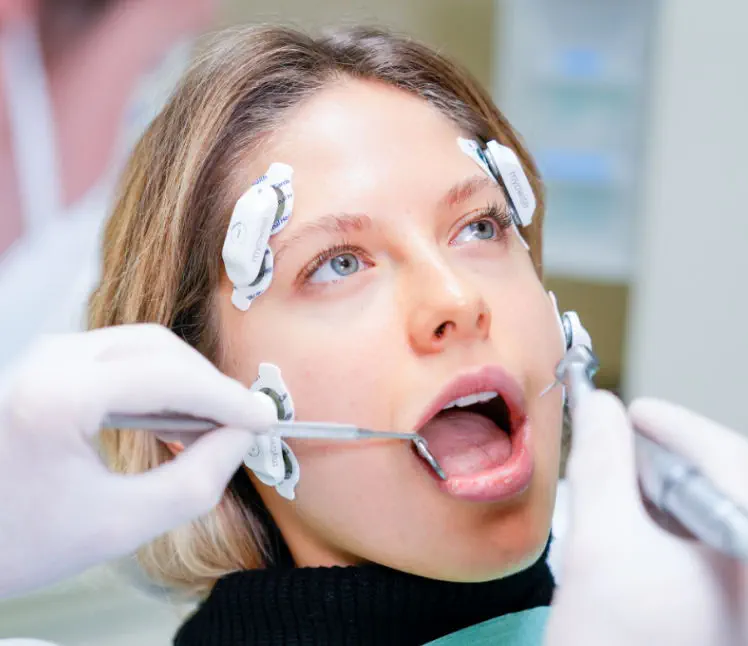
Surface electrodes are illustrated in a dental examination. The image shows an acquisition setting; it is not evidence of a diagnosis or successful treatment in this patient.
What have TENS trials actually measured?
Short-term symptoms: Ferreira and colleagues studied 40 patients with myofascial TMD in a randomized placebo-controlled trial. Their protocol used one 50-minute session and assessed outcomes through 48 hours. The findings concerned short-term pain-related measures and task-dependent muscle activity. They did not test orthodontic stability, implant survival or an ideal restorative jaw relation. Read the trial.
Muscle activity and posture: Monaco and colleagues studied 60 selected women with unilateral TMD in remission, comparing sensory-threshold TENS, motor-threshold TENS and an untreated control. A single 60-minute session reduced selected resting sEMG measures and increased vertical interocclusal distance; neither threshold proved superior. This is a response in a defined population, not proof of a uniquely correct bite position. Read the controlled study.
These protocols should not be treated as interchangeable. The Ferreira trial used sensory stimulation without muscle contraction; the Monaco study compared two thresholds. A session length reported in one study is not a universal prescription for restorative patients.
How should those findings influence clinical decisions?
For chronic TMD pain lasting at least three months, the 2023 BMJ guideline conditionally recommends against TENS. This applies to that chronic-pain context; it is not a prohibition on every TENS application or a claim that no individual experiences relief. Consider the diagnosis, patient preferences, alternatives and the limited duration of the available trial observations.
The NIDCR guidance emphasizes conservative TMD care and warns that irreversible changes to teeth or the bite are not established treatment for TMD and may cause harm. An EMG or TENS response alone should therefore not trigger irreversible bite-changing treatment for TMD.
How do you use a protocol without turning it into a guarantee?
- Define the clinical indication and complete appropriate safety screening before selecting a device or stimulation protocol.
- Use the specific device’s authorized instructions and the clinician’s case-specific plan; do not copy a universal duration or claim complete muscle relaxation.
- Record the acquisition task, electrode arrangement and relevant settings so repeated measurements can be meaningfully compared.
- Reassess symptoms and function. A changed signal or mandibular posture is a finding to interpret, not automatic approval of a definitive restoration.
These are DDS educational interpretations of the study limitations and clinical guidance above. The evidence does not demonstrate elimination of proprioception or “perfect” bite registration.
What do named wireless systems add?
MyoWise and Teethan are examples of manufacturer-described wireless dental EMG systems. Their documentation describes acquisition and reporting features. Wireless design can simplify handling; it does not, by itself, prove greater diagnostic accuracy or better treatment outcomes than another method.
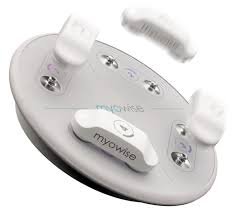
MyoWise hardware shown for device identification. Product appearance and manufacturer specifications are distinct from clinical outcome evidence.
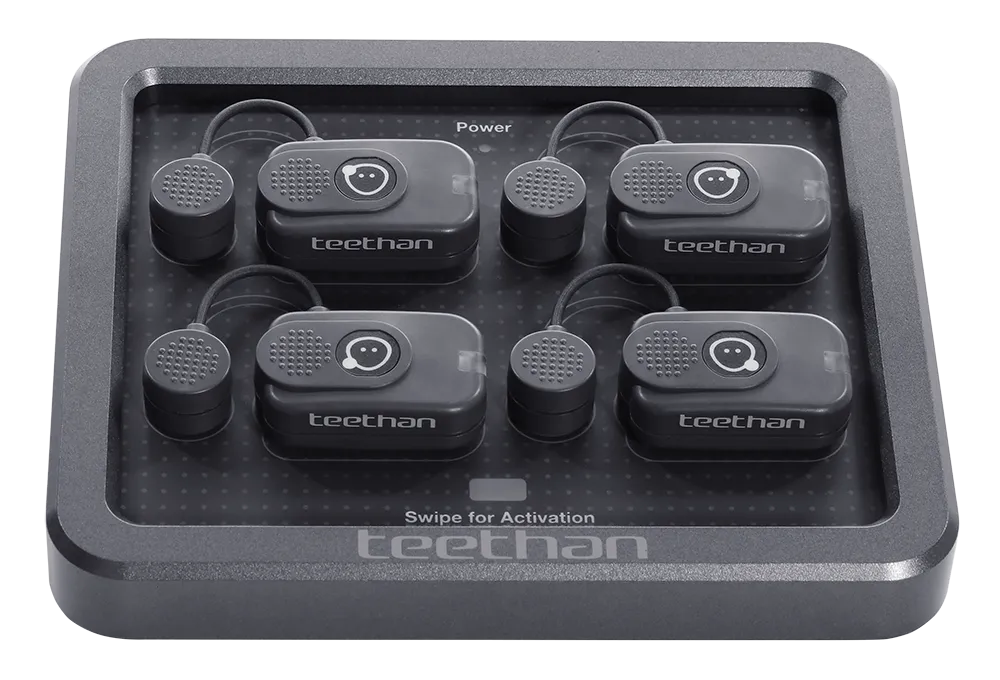
Teethan hardware shown for device identification. Review the current manufacturer instructions and intended measurement before selecting a protocol.
When comparing systems, ask about the intended measurement, reproducibility, data export, training and current written costs. No universal return-on-investment period or brand-superiority ranking is established by the clinical sources discussed here.
What should the dentist and laboratory take forward?
- For the clinician: interpret sEMG with the history and examination rather than using a single index as a diagnosis.
- For the restorative team: distinguish a documented muscle/posture response from an independently verified jaw-relation record and prosthetic plan.
- At review: judge the patient’s symptoms, function and restoration using appropriate clinical follow-up; do not promise long-term stability from a short-term physiological change.
DDS brings these studies together to make the measurement and treatment questions easier to separate. The useful goal is a better-informed clinical discussion, not replacing judgment with a device score.
Sources and further reading
- Ferreira and colleagues: randomized placebo-controlled TENS trial, 2017
- Monaco and colleagues: sensory- and motor-threshold TENS clinical study, 2013
- Schiffman and colleagues: Diagnostic Criteria for Temporomandibular Disorders, 2014
- Manfredini and colleagues: diagnostic-accuracy study of sEMG and jaw tracking, 2011
- BMJ clinical practice guideline for chronic TMD pain, 2023
- NIDCR: Temporomandibular Disorders
- Systematic review and meta-analysis of EMG discrimination in TMD, 2025