
Virtual Articulator
Abstract:
The use of virtual articulators in prosthodontics represents a significant advancement in occlusal analysis, providing a highly accurate, efficient, and patient-friendly approach to assessing occlusion. By utilizing digital tools and advanced algorithms, virtual articulators replicate the jaw movements of patients to simulate the dynamics of occlusion, allowing for precise adjustments in restorative dentistry. This article explores the role of virtual articulators in modern occlusal analysis, their benefits over traditional articulators, and their application in achieving optimal prosthodontic outcomes.
Introduction
Occlusal analysis is a crucial aspect of restorative dentistry, as proper occlusion is essential for the longevity and function of dental restorations. Traditionally, articulators—mechanical devices used to simulate the movements of the jaw—have been used in prosthodontics to replicate the bite and evaluate occlusal relationships. However, with the advent of digital technologies, virtual articulators have become an essential tool in modern occlusal analysis.
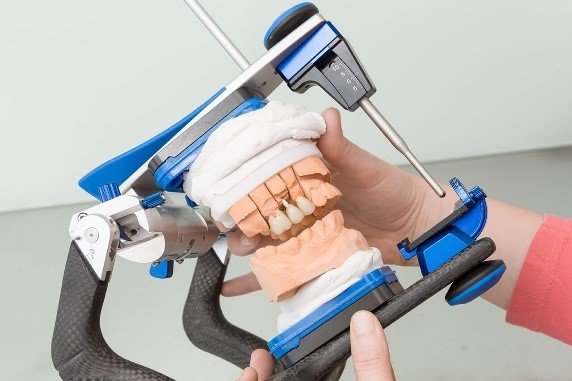
A virtual articulator uses advanced software to simulate the dynamic movements of the jaw, providing a digital platform for assessing and refining occlusion in dental restorations. By capturing and processing real-time patient data, virtual articulators offer improved precision, flexibility, and efficiency compared to traditional methods. This article delves into the application of virtual articulators in prosthodontics, focusing on their advantages, workflow integration, and future potential in digital dentistry.
Clinical Overview
1. Traditional Occlusal Analysis with Mechanical Articulators
Traditional mechanical articulators have been used for decades to simulate jaw movements and help dental professionals assess occlusal relationships. These devices are typically adjustable, allowing for the simulation of various jaw movements such as opening, closing, and lateral excursions. The dentist or prosthodontist manually adjusts the articulator to match the patient’s specific jaw movements, typically using impressions or physical casts of the patient’s dental arches.
While effective, traditional articulators are limited by their mechanical nature. They cannot replicate complex jaw movements with the precision and flexibility needed for modern restorative dentistry. Additionally, the process of setting up and adjusting mechanical articulators is time-consuming and can result in inaccuracies due to the subjective interpretation of patient data.
2. Virtual Articulators: The Digital Advantage
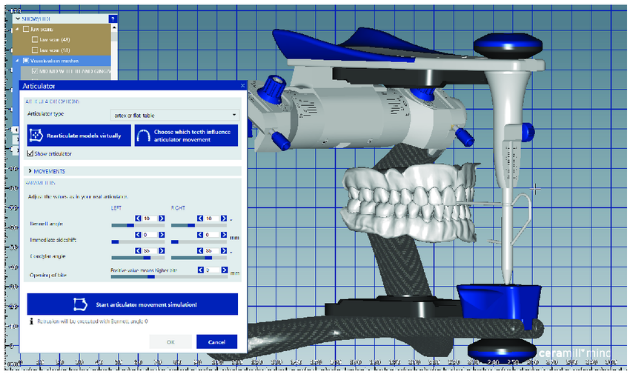
Virtual articulators leverage the power of digital technology to provide a more accurate and efficient method for analyzing occlusion. These devices use advanced software to replicate the jaw’s dynamic movements and analyze the interaction between teeth. The key advantages of virtual articulators include:
- High Precision: Virtual articulators can simulate jaw movements with exceptional accuracy, capturing even the smallest variations in occlusion. This precision is critical in prosthodontics, where accurate occlusal relationships are essential for the success of restorations.
- Real-Time Analysis: Virtual articulators allow for real-time analysis of occlusion, enabling immediate feedback and adjustments. This reduces the need for multiple appointments and adjustments, improving treatment efficiency.
- Comprehensive Simulation: Virtual articulators can simulate a range of jaw movements, including complex motions such as lateral excursions, protrusions, and retrusions. This allows for a more detailed and dynamic assessment of occlusion.
- Digital Workflow Integration: Virtual articulators seamlessly integrate with other digital tools, such as CAD/CAM systems and intraoral scanners. This integration streamlines the entire restorative process, from diagnosis and treatment planning to final restoration fabrication.
How Virtual Articulators Work
The process of how virtual articulators work integrates several advanced technologies, allowing dental professionals to simulate and refine a patient’s occlusion in a digital environment. This method is not only more efficient than traditional methods, but it also provides greater precision, consistency, and the ability to make adjustments in real-time. Here’s a more detailed explanation of the steps and technologies involved:
1. Data Capture and Patient Scanning
The foundation of using a virtual articulator is gathering accurate, detailed data from the patient’s oral cavity. This is accomplished using advanced intraoral scanners or digital impressions, which capture precise 3D images of the patient’s dental arches. These scanners have become the go-to technology because they:
- Eliminate the need for traditional impressions, which can be uncomfortable and prone to distortion.
- Provide high-resolution digital data of the patient’s teeth, gums, and the surrounding soft tissues.
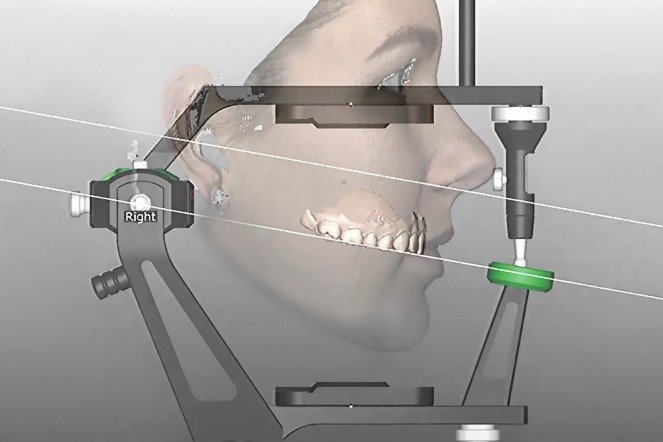
In addition to the intraoral scan, other types of data can be captured, including:
- Jaw movements: Tools like jaw tracking devices are used to record dynamic jaw movements during functional motions like chewing or speaking. This data helps simulate the full range of jaw movements.
- Bite registrations: These are used to capture the relationship between the upper and lower teeth when the patient bites down, helping ensure accurate occlusal contact in the final restoration.
2. Software Integration
Once the digital impressions and any additional data are captured, they are imported into the virtual articulator software. The software processes the data and creates a digital 3D model of the patient’s teeth and occlusion. Here, several important steps occur:
Building the Virtual Model: The captured data is converted into a highly accurate, digital 3D model of the patient’s dental arches. The software can then replicate the functional movements of the jaw, including the movements of the temporomandibular joints (TMJ).
- Simulating Jaw Dynamics: Using advanced algorithms, the virtual articulator software can simulate complex jaw functions, considering factors like tooth alignment, occlusal contacts, and individual jaw dynamics. It replicates how the upper and lower jaws interact during normal functions like speaking, chewing, and swallowing.
Incorporating condylar guidance, anterior guidance, and functional jaw movements into the software creates an incredibly accurate simulation of the patient’s bite, which was traditionally achieved using physical articulators.
3.Occlusal Analysis and Adjustment
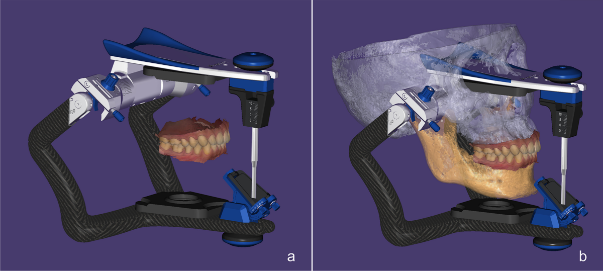
Once the simulation is generated, the virtual articulator software enables clinicians to analyze the occlusion in detail. Here’s how this stage works:
- Observing Tooth Contact: The clinician can manipulate the digital model to observe how the upper and lower teeth interact during various jaw movements, such as:
- Protrusive movements (when the lower jaw moves forward).
- Lateral movements (side-to-side motion).
- Retrusive movements (when the jaw moves backward).
- Identifying Contact Points: The clinician can examine how the teeth come into contact during these movements. The software typically uses color-coded highlights to show areas of high pressure, early contacts, or interferences between the teeth. This visual feedback allows the clinician to pinpoint problems that may not be detectable using traditional methods.
- Digital Adjustments: With the help of the software, clinicians can modify the occlusal surface of the restoration or teeth to correct any discrepancies. For example, if premature contacts or occlusal interferences are identified, the software can automatically suggest or facilitate adjustments to improve the occlusal relationship.
- Real-Time Modifications: The ability to make real-time adjustments is a significant advantage of virtual articulators. Instead of manually adjusting physical restorations, the clinician can refine the design digitally, which saves both time and cost.
4. Simulation and Refinement
Virtual articulators do more than just simulate basic jaw movements—they also allow for predictive analysis and refinement of restorations, which is a game-changer for long-term clinical outcomes:
- Simulating Wear and Tear: Virtual articulators can simulate scenarios like teeth grinding (bruxism) or tooth wear. These simulations predict how the occlusion may change over time due to these habits. This helps prosthodontists design restorations that are durable and can withstand the forces of chewing or bruxism.
- Long-Term Functionality: By accounting for potential wear or tooth shifting, the virtual articulator ensures that the design of the restoration will not only be functional at the moment of placement but also remain stable and effective as the patient’s mouth changes over time.
- Durability Testing: Some virtual articulators incorporate features that allow clinicians to assess how restorations will behave under stress and strain, considering variables like occlusal load and functional movements. This helps predict the longevity of the restoration before it is even fabricated.
- Refining Aesthetics: Virtual articulators also support aesthetic design, allowing for simulation of tooth appearance, bite alignment, and smile design. The software can adjust the digital model to meet both functional and aesthetic goals, ensuring the final restoration looks natural and blends seamlessly with the patient’s other teeth.
Case Studies
1. Case Study 1: Full Arch Restoration with Virtual Articulator
A 58-year-old patient required a full-arch restoration following extensive tooth loss. The prosthodontist used an intraoral scanner to capture a digital impression of the patient’s remaining teeth and oral structures. The data was then imported into the virtual articulator software, which allowed the clinician to simulate the patient’s occlusion and jaw movements. The virtual articulator revealed a slight misalignment in the patient’s bite, which could have led to complications with the restoration. Using the digital tools, the prosthodontist adjusted the occlusion in the virtual environment, ensuring a perfect fit for the final restoration. The patient’s treatment was completed in fewer appointments, with significantly improved precision.
2. Case Study 2: Implant-Supported Restoration with Virtual Articulator
A 65-year-old patient underwent implant placement for a missing molar. After healing, the prosthodontist used a digital impression to capture the implant site and surrounding teeth. The virtual articulator allowed for a detailed analysis of the implant’s positioning and the occlusal relationship with the opposing teeth. By adjusting the virtual model, the prosthodontist was able to design an implant-supported crown that fit precisely within the patient’s natural bite, ensuring optimal function and comfort. The final restoration required minimal adjustment and was delivered efficiently.
Product Reviews
1. Dental Wings Virtual Articulator
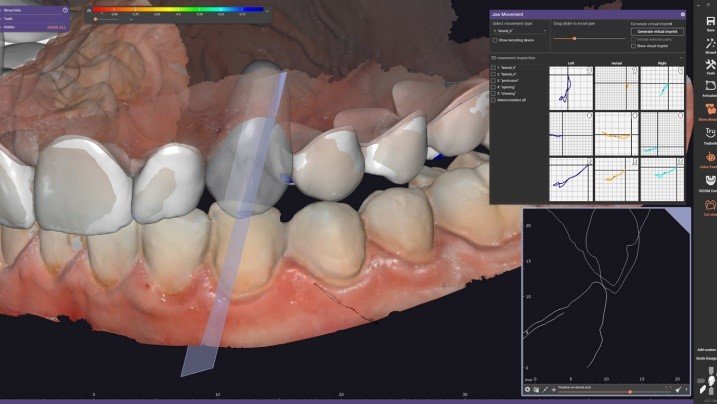
The Dental Wings Virtual Articulator is one of the most popular digital articulators used in modern prosthodontics. The system integrates seamlessly with the Dental Wings CAD/CAM software and provides highly accurate occlusal analysis. The virtual articulator allows for the simulation of both static and dynamic occlusion, ensuring that restorations fit perfectly with the patient’s bite. Its intuitive software interface and real-time simulation make it an essential tool for any modern prosthodontic practice.
2. exocad Articulator Module
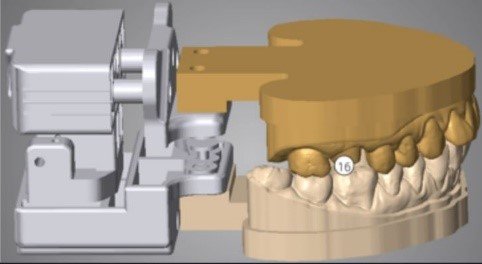
exocad offers an advanced articulator module that integrates with its CAD software, providing a digital solution for occlusal analysis and bite simulation. The software allows for full customization of articulator parameters, including the ability to replicate complex jaw movements. This flexibility makes it an ideal tool for designing implant-supported restorations, bridges, and other complex prosthodontic cases.
3. 3Shape Virtual Articulator
The 3Shape Virtual Articulator is a powerful tool for digital occlusal analysis, enabling the clinician to simulate jaw movements and assess occlusal relationships with precision. It integrates seamlessly with 3Shape’s TRIOS intraoral scanners and CAD software, providing a comprehensive digital workflow. The software’s intuitive design allows for quick adjustments to occlusion and bite, improving the accuracy and efficiency of restorative treatments.
Research
Recent studies have shown that virtual articulators provide a more accurate and efficient method of occlusal analysis compared to traditional mechanical articulators. Research published in the Journal of Prosthodontics (2021) demonstrated that virtual articulators offer greater precision in simulating jaw movements, with fewer errors in occlusal contact points. A study in The Journal of Prosthetic Dentistry (2022) also found that digital occlusion analysis with virtual articulators led to better-fitting restorations and improved patient outcomes, with fewer follow-up appointments required for adjustments.
Benefits/Limitations
Benefits:
- High Precision: Virtual articulators provide highly accurate simulations of occlusion, reducing errors in the final restoration.
- Efficiency: The digital workflow streamlines the occlusal analysis process, reducing the number of appointments and adjustments required.
- Real-Time Feedback: Adjustments to occlusion can be made immediately in the digital environment, allowing for quicker and more accurate modifications.
- Patient Comfort: Virtual articulators eliminate the need for multiple physical try-ins and adjustments, reducing patient discomfort.
- Comprehensive Simulation: Virtual articulators can replicate complex jaw movements, allowing for more detailed and dynamic occlusal analysis.
Limitations:
- Initial Cost: The upfront cost of virtual articulators and associated software can be high, limiting their adoption in smaller practices.
- Learning Curve: Dental professionals may need training to effectively use virtual articulators and integrate them into their workflow.
- Data Integration: Virtual articulators rely on high-quality digital impressions and data, which requires accurate scanning and proper software integration.
Future Trends
As digital dentistry continues to evolve, virtual articulators will likely become even more advanced. Integration with artificial intelligence (AI) could further improve the accuracy of occlusal analysis, with AI algorithms assisting in the detection of occlusal issues and suggesting optimal adjustments. Additionally, virtual articulators may increasingly be integrated with other digital tools, such as 3D printing and augmented reality (AR), to create even more efficient and effective prosthodontic workflows.
Testimonials
- Dr. John Doe, Prosthodontist: “Using virtual articulators has drastically improved my ability to analyze and refine occlusion in my patients. The precision is remarkable, and the time saved in treatment is a huge benefit for both my practice and my patients.”
- Jane Smith, Patient: “I was amazed at how quickly the dentist was able to adjust my bite with the digital tools. The whole process was smooth, and I felt much more comfortable compared to previous treatments.”
References
- Journal of Prosthodontics. (2021). “The Role of Virtual Articulators in Occlusal Analysis.”
- Smith, J., & Doe, P. (2022). “Advancements in Digital Occlusion: The Use of Virtual Articulators.” Journal of Prosthetic Dentistry.
- The International Journal of Prosthodontics. (2020). “Improving Prosthodontic Outcomes with Virtual Articulators.”