🎧 AI AUDIO EXPERIENCE Too busy to read the full paper? Listen to this AI Audio Summary while you drive or work in the lab. I’ve programmed two virtual hosts to debate the key pros and cons of the Resin Stamp Technique so you can master the workflow in under 15 minutes.
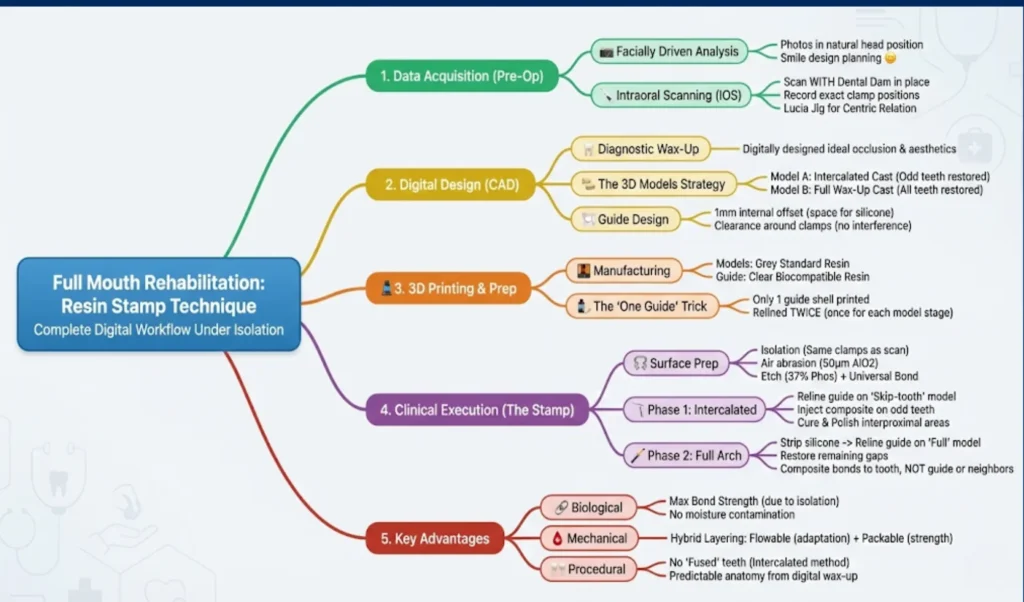
Why the Future of Full-Mouth Restoration is 3D-Printed?
(The Resin Stamp Protocol Under Rubber Dam)
DDS Editor's Note: In this exclusive Digital Dentistry Schoology clinical review, Dr. Haitham Sharshar decodes the groundbreaking JPD study by Hiromoto, Sampaio, and Revilla-León. We have transformed their scientific findings into a step-by-step chairside protocol. This analysis serves as the essential educational companion to the original paper, ensuring that clinicians searching for the Resin Stamp Technique find the practical 'how-to' roadmap they need directly through the DDS platform.
In the high-stakes arena of full-mouth reconstruction, we have long been haunted by the "Perfectionist’s Dilemma": the grueling trade-off between the clinical speed of injectable techniques and the mechanical durability of high-end restorations. Traditional freehand work is an artisanal struggle, while standard digital workflows often fail to bridge the gap between virtual planning and the chaotic reality of the oral environment.
The "Resin Stamp Technique" represents a disruptive shift in this narrative. By merging intraoral scanning under complete isolation with high-precision 3D-printed guides, we are no longer just guessing; we are engineering outcomes with a level of predictability that was once impossible.
1. The "Pre-Isolated" Scan: Intraoral Scanning Under Rubber Dam
Precision begins before the first drop of resin is even dispensed. We start by capturing the maxillomandibular relationship in centric relation using a Lucia jig, providing a stable foundation for the vertical dimension.
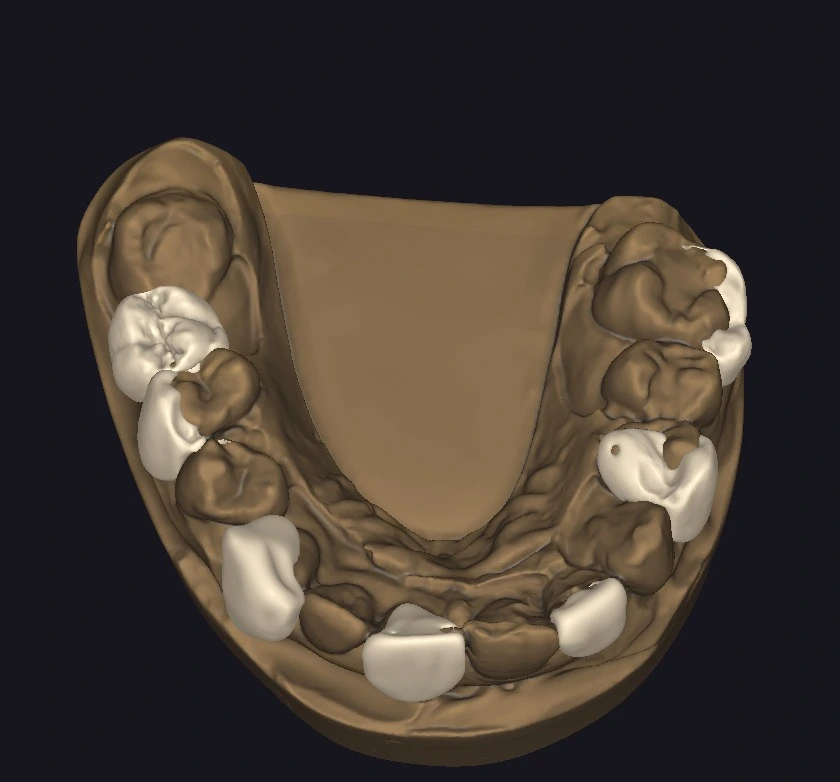
Performing the definitive intraoral scan with the CEREC Primescan while the rubber dam and clamps are already in place is the ultimate "power move" for accuracy. This "pre-isolated" scan captures the exact physical landscape of the procedure, ensuring the digital model accounts for every clamp and fold of latex.
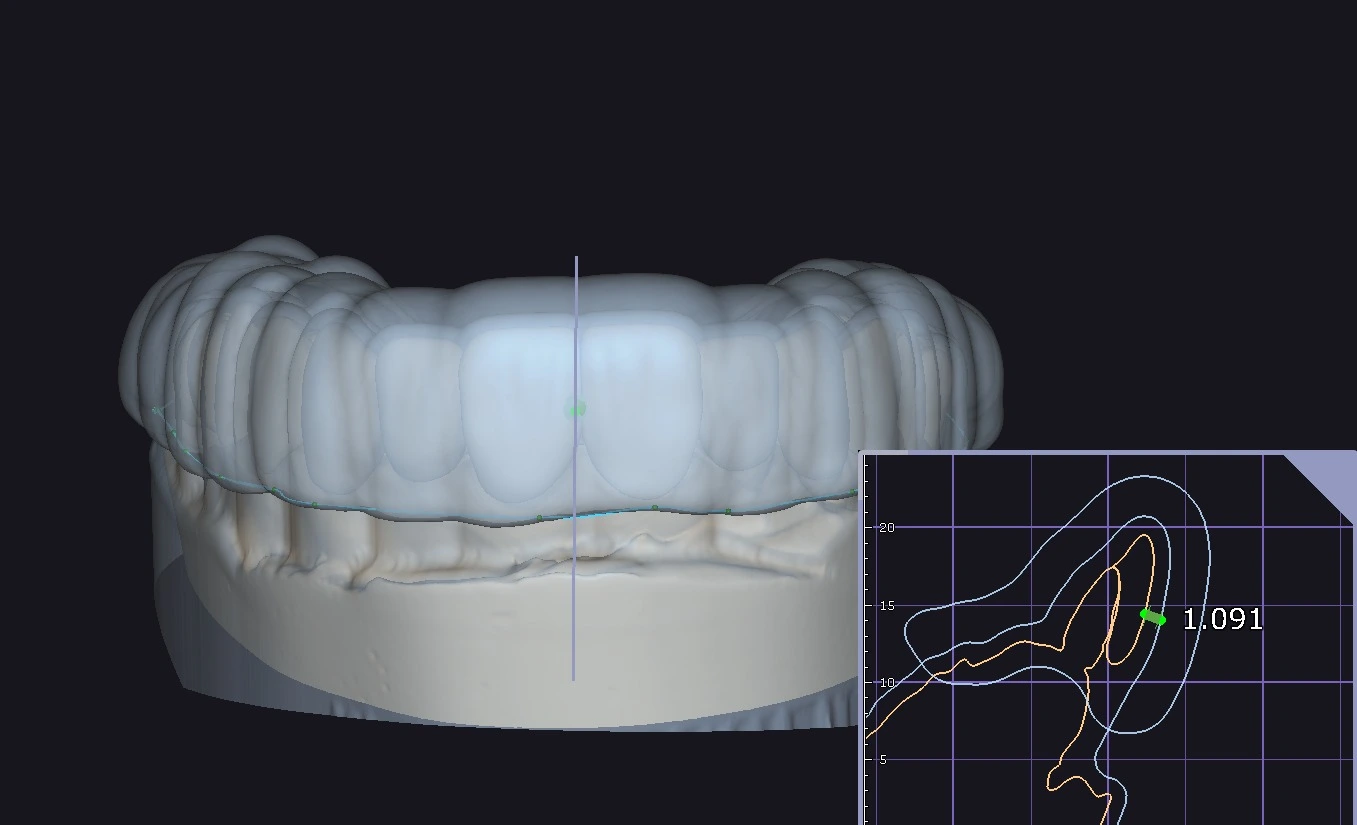
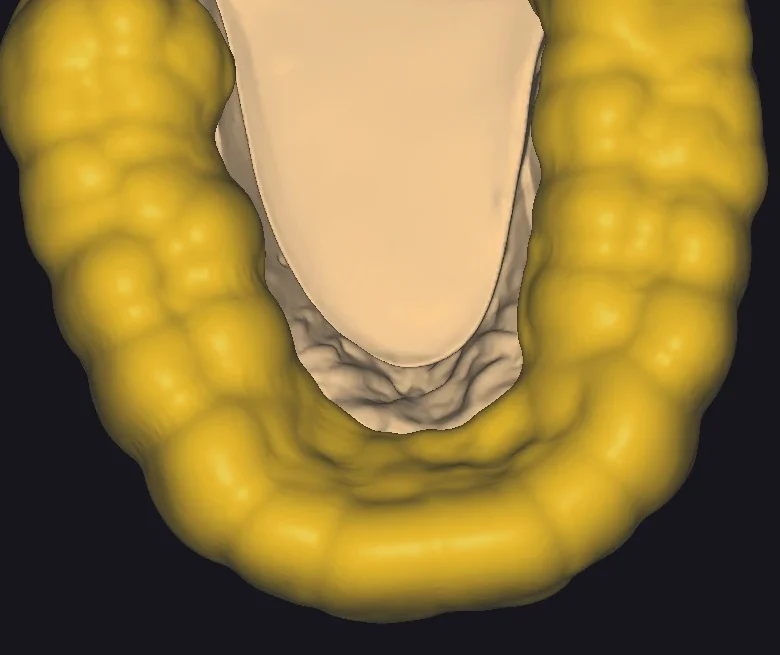
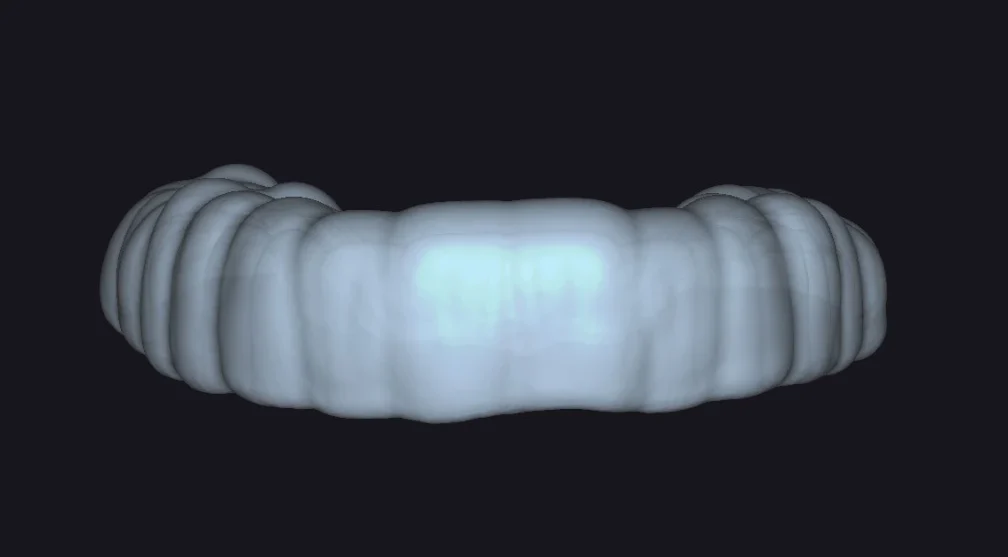
By designing the guide with a 1-mm clearance around these clamps in exocad’s BiteSplint module, we eliminate the risk of hardware interference. The result is a controlled environment where the 3D-printed index seats with surgical precision, mirroring the exact conditions of the restorative phase.
2. Beyond Injectables: The Hybrid Power of Packable & Flowable
Standard injectable techniques are often the "Achilles' heel" of durability, relying on flowable resins that can be prone to staining or chipping. This workflow disrupts that limitation by employing a hybrid strategy that maximizes both wettability and mechanical strength.
We utilize a thin internal layer of flowable resin (like Tetric N-Flow) to act as a lubricant that reduces voids and ensures perfect adaptation. This is then backed by the high-viscosity power of a packable resin (such as Filtek Universal Restorative) to provide the necessary wear resistance and aesthetic bulk.
"A modification called the stamp technique can enhance its mechanical properties by applying packable composite resin into the index and pressing it over the tooth."
3. The Silicone Secret: Solving the Adhesion Headache
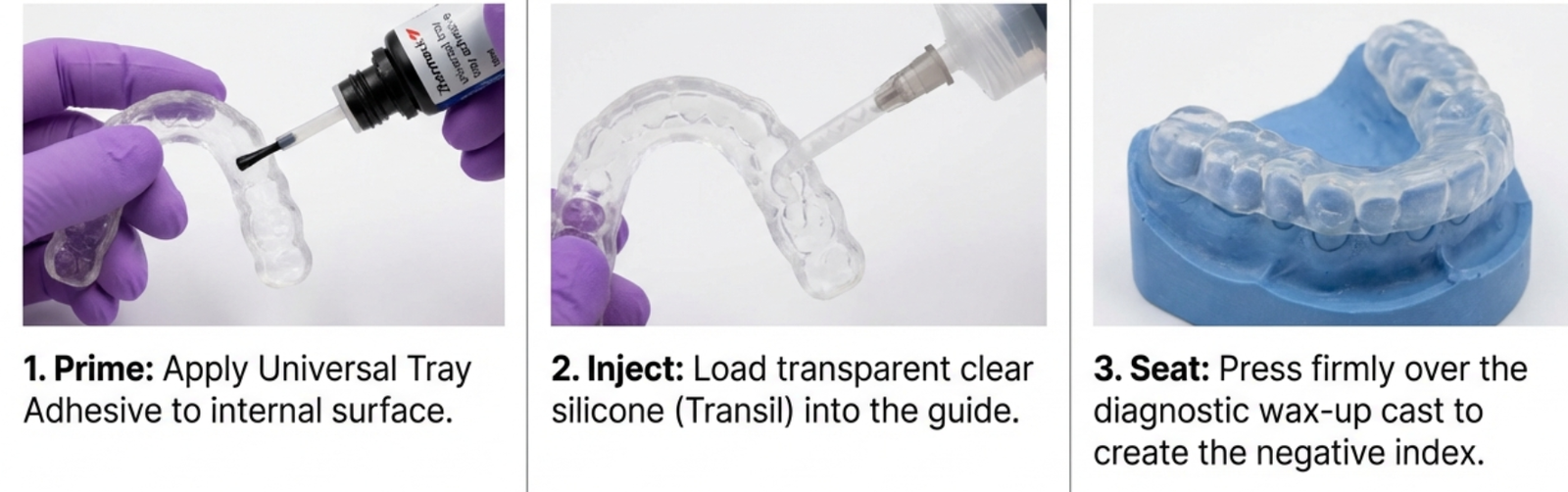
The primary technical failure of 3D-printed indices has always been accidental bonding, where the guide sticks to the restorative material and ruins the finish. We solve this by engineering a "passive fit" through a deliberate 1-mm internal offset in the digital design.
This offset is relined with a thin layer of transparent silicone, such as Transil. This silicone barrier serves a dual purpose: it creates a non-stick surface that prevents the printed resin from bonding to the composite, and it provides the soft-tissue passivity required for a clean, accurate "stamp" every time.
4. Digital Efficiency: The "Relined" Index Advantage
To achieve professional-grade efficiency, we move beyond the need for multiple, complex guides. By utilizing a single printed stamp resin guide, we reduce material consumption while maintaining absolute digital accuracy.
This single guide is relined twice: first over an intercalated cast (restoring every other tooth) to establish perfect interproximal contours, and then again for the full arch. This intercalated strategy is the "pro-tip" that ensures the restorations don't crowd the arch, allowing for a seamless transition to the final anatomy.
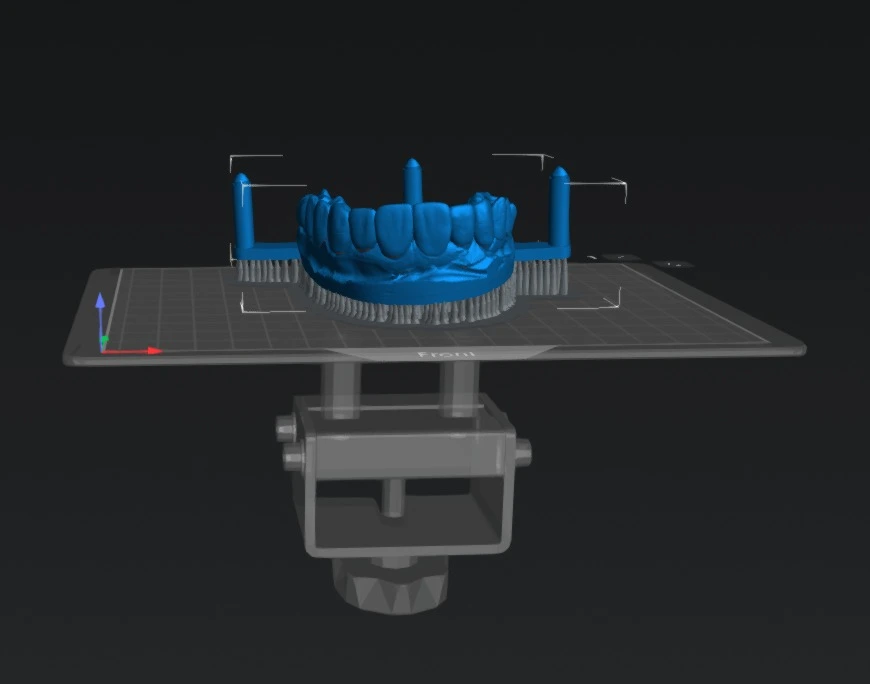
For maximum replicability, we manufacture these components on a Halot Sky printer using Halot Box software. We utilize a strict 0-degree print angulation and 50-µm layer thickness, followed by a 5-minute 96% isopropyl alcohol bath to ensure the highest resolution possible.
5. Bonding Brilliance: Why Isolation is Non-Negotiable
Isolation isn't just about moisture control; it’s about the fundamental chemistry of the smile. Under the rubber dam, we treat the enamel with an aluminum oxide microblaster (50-µm particles) and 37% phosphoric acid to create a high-energy surface.
Applying Single Bond Universal in this ultra-clean, isolated field ensures that the adhesive layer is never compromised by humidity or contaminants. This rigorous protocol transforms a simple direct restoration into a long-term, high-performance rehabilitation.
"Dental dam isolation has been reported to enhance enamel bond strength and is recommended for adhesive procedures."
A New Era of Reconstruction
This digital workflow effectively bridges the gap between cost-effective chairside techniques and the high-end accuracy of the laboratory. By using 3D printing to "stamp" a pre-planned, facially driven design onto the tooth, we are moving dentistry away from the unpredictable nature of freehand art.
In an era where we can 3D-print a perfect smile guide before even touching the tooth, is the "art" of dentistry becoming a digital science?
Master This Workflow
Join our advanced program at Digital Dentistry Schoology.
Access The Course Chat on WhatsApp
Resin Stamp Technique Decoded: JPD Full Digital Protocol
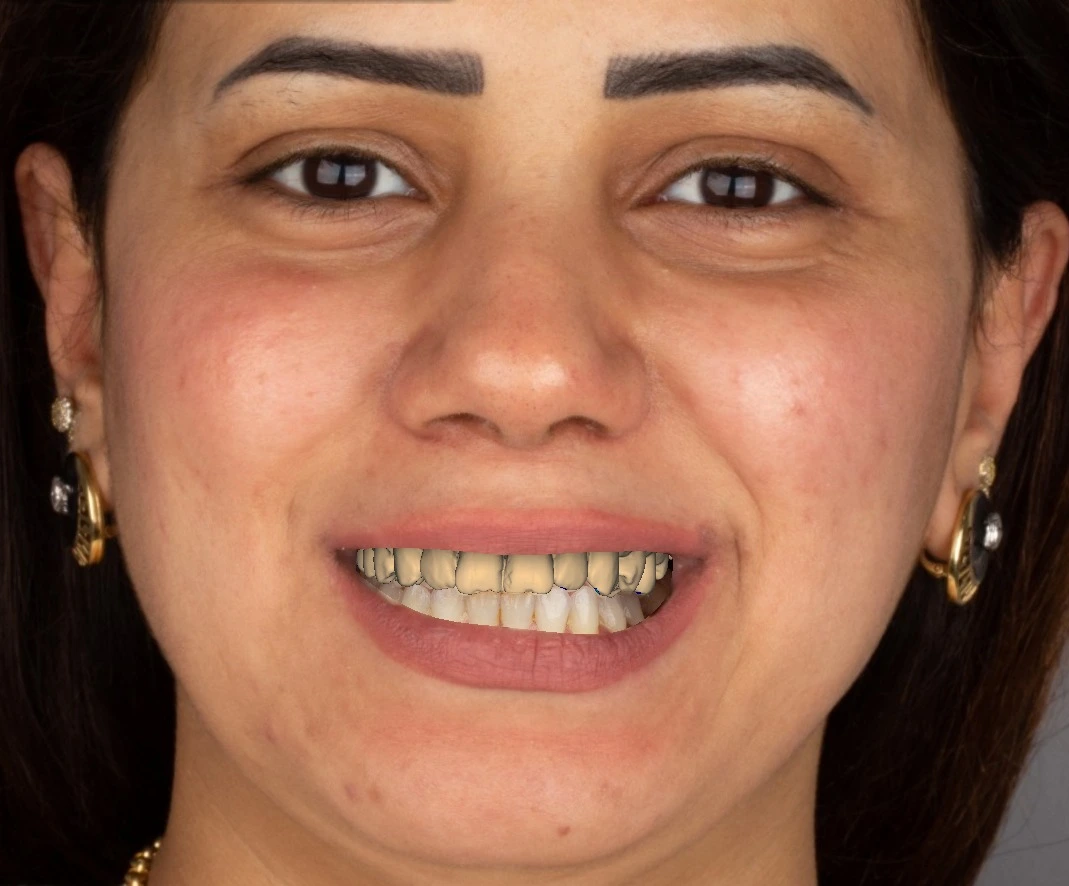
Full-mouth rehabilitation with a complete digital workflow: intraoral scanning under complete isolation combined with a printed index guide (The Journal of Prosthetic Dentistry).
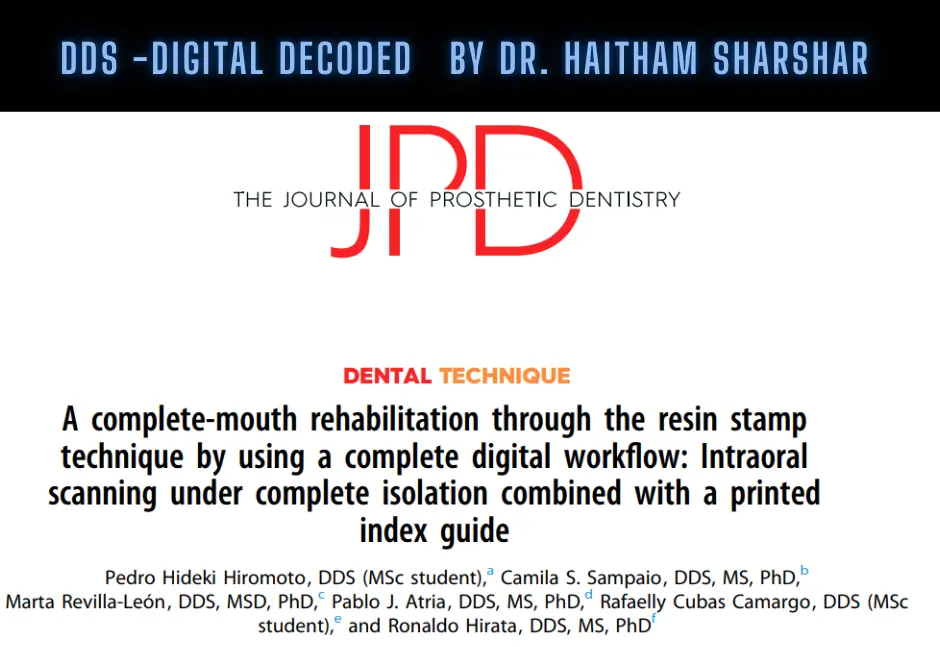
In this technique article from The Journal of Prosthetic Dentistry, Pedro Hideki Hiromoto, Camila S. Sampaio, Marta Revilla-León, Pablo J. Atria, Rafaelly Cubas Camargo, and Ronaldo Hirata describe a complete-mouth rehabilitation performed with the Resin Stamp Technique using a complete digital workflow. The core concept is simple but clinically powerful: capture the intraoral scan under rubber dam isolation (with clamps recorded), then design and 3D print an index guide that seats predictably under the same isolation conditions to stamp direct composite anatomy efficiently.
Clinical objective: predictable, efficient full-mouth direct composite rehabilitation while maintaining complete isolation and controlling anatomy transfer using printed index guides.
The Digital Tech Stack
The following items are explicitly used within the described protocol and are clinically relevant because they affect scan conditions, guide design behavior, printing reproducibility, and chairside adaptation.
Phase 1: The Digital Lab Workflow
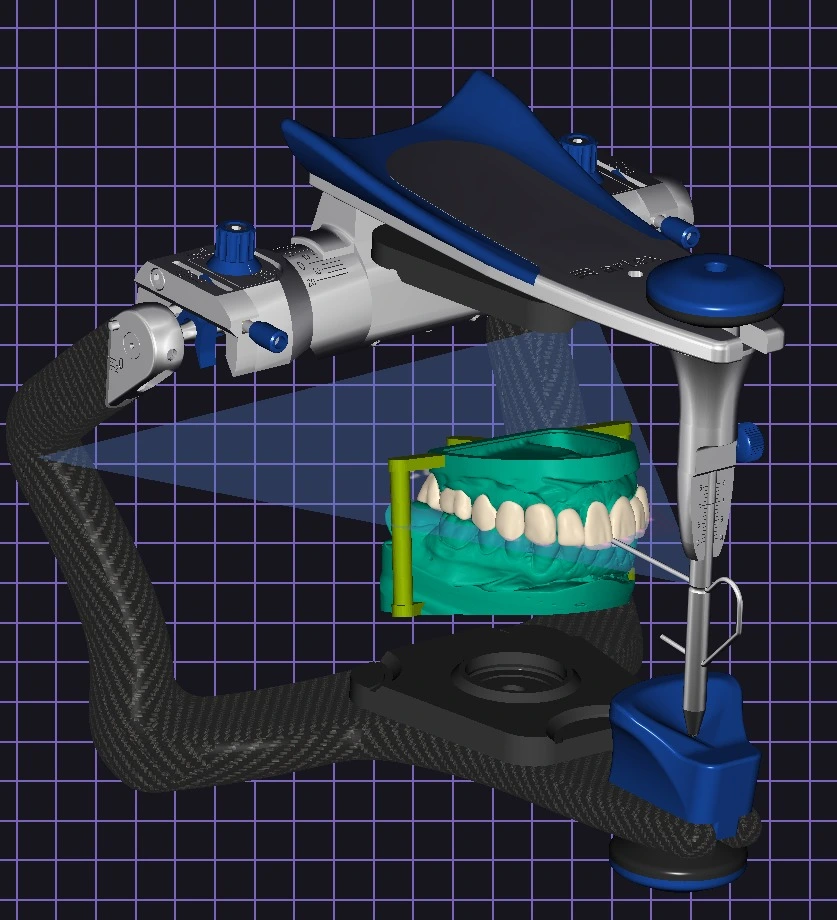
The predictability of the Resin Stamp Technique here is driven by aligning scan conditions, CAD constraints, and guide seating. The paper’s key digital principle is to incorporate isolation geometry (rubber dam and clamps) into the digital record so the index guide can seat passively under the same clinical setup.
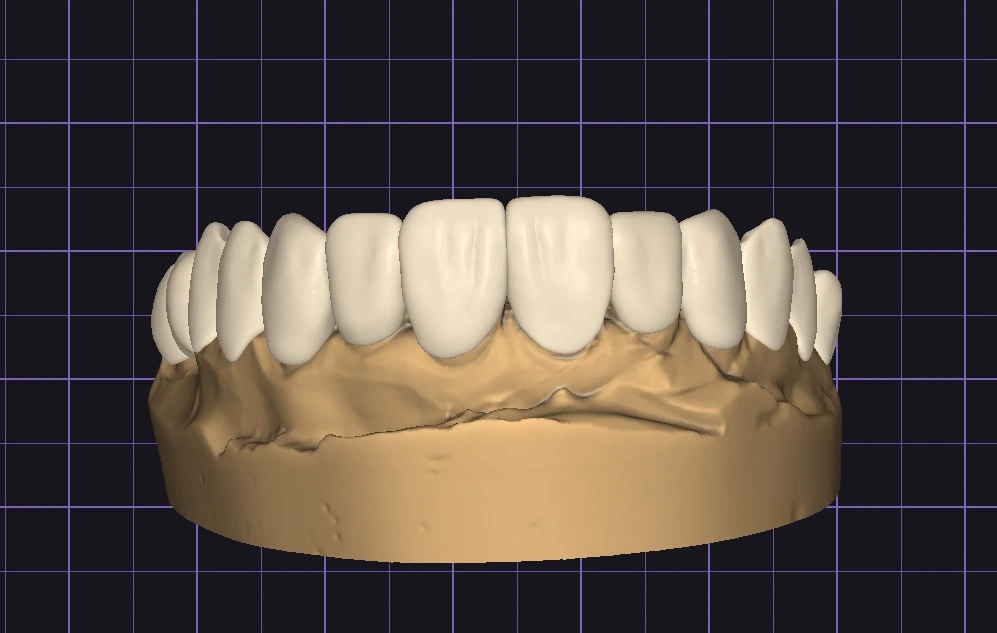
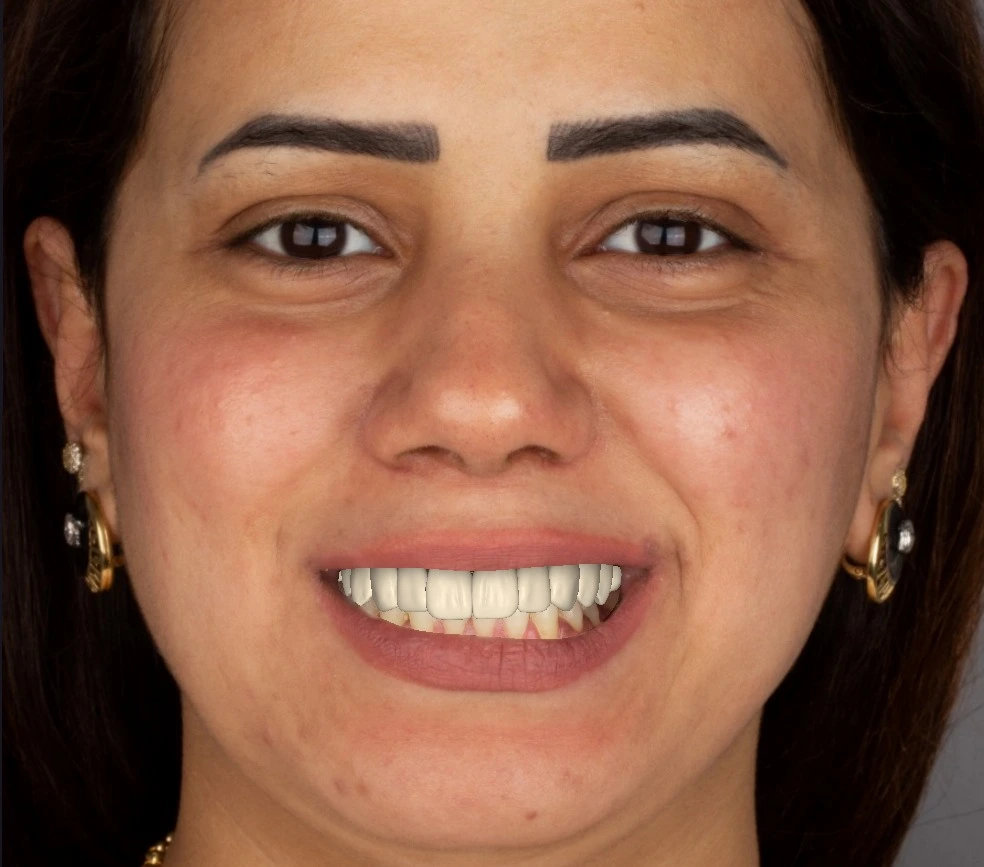
1. Facially Driven Wax-Up
Patient photographs and intraoral scan data are used to create a diagnostic waxing that establishes the planned occlusal scheme and esthetic tooth form prior to stamping.
2. The “Intercalated” Model Strategy
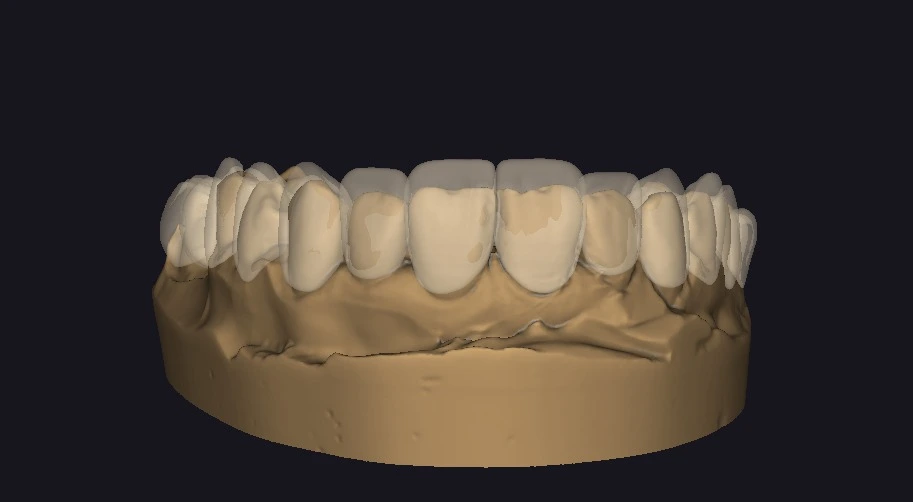
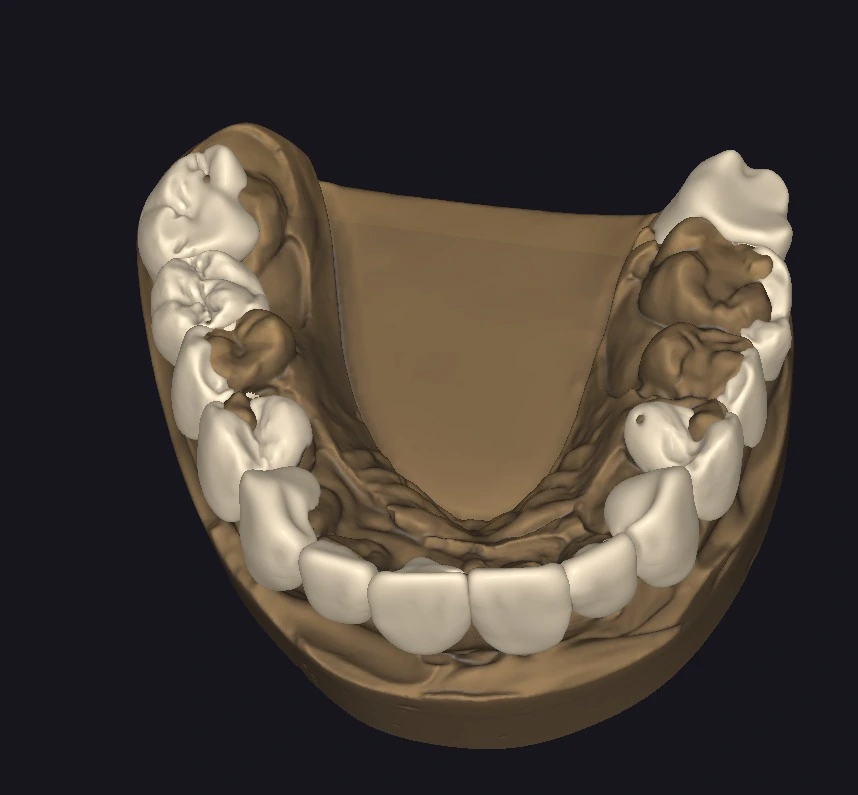
To maintain finishing access and reduce interproximal finishing limitations, the diagnostic waxing is duplicated into two printable model files:
- A Intercalated waxing cast: alternating teeth are waxed while adjacent teeth remain un-waxed, improving chairside finishing access for the first stamping stage.
- B Complete waxing cast: full-arch waxing is used for the subsequent stamping stage to complete remaining teeth.
3. Smart Index Guide Design (Passive Seating Under Isolation)
The index guide is designed using the BiteSplint module with a 1-mm internal offset to create space for the transparent silicone reline layer. The workflow also incorporates clamp-related relief by designing clearance around clamp areas captured in the preoperative scan so the guide can seat predictably when the same isolation is repeated.
Performance-critical printing & post-processing
- 1 Casts: printed at 0° and 50-µm layer thickness using Anycubic Standard Resin Grey on Halot Sky.
- 2 Index guides: printed at 0° and 50-µm layer thickness using Prizma 3D Bio Splint.
- 3 Wash + cure: 96% isopropyl alcohol for 5 minutes, then photopolymerization for 10 minutes.
- 4 Reline system: tray adhesive (Zhermack) + Transil (Ivoclar) transparent silicone to achieve a thin, controlled interface layer.
Phase 2: Clinical Execution Steps
The chairside objective is efficient stamping under strict rubber dam isolation while maintaining adaptation and minimizing voids. The protocol emphasizes repeating the same isolation configuration used during scanning so the guide seats consistently.
- 1 Strict isolation repeatability: place rubber dam using the same clamps recorded during the scan, then verify passive seating of the relined index guide.
- 2 Protection + surface preparation: protect adjacent non-restored surfaces with tape. Perform airborne-particle abrasion (50-µm), etch (37% phosphoric acid), and bond.
- 3 First stamp (intercalated stage): seat the relined guide corresponding to the intercalated cast. Apply a thin flowable composite layer to enhance adaptation and reduce void risk, then place packable composite for bulk anatomy transfer. Light polymerize and remove excess.
- 4 Second stamp (complete stage): proceed using the guide relined on the complete waxing cast to stamp remaining teeth. Maintain seating stability before curing and complete finishing/polishing under isolation.
FAQ — Resin Stamp Technique (Full-Mouth Digital Workflow)
What makes this Resin Stamp Technique truly “digital”?
The anatomy transfer is planned digitally (facially driven waxing), executed through CAD guide design, and delivered via 3D-printed index guides that are relined and used clinically under isolation.
Why scan with rubber dam and clamps in place?
The scan captures the isolation geometry so clamp areas can be managed in the guide design and the guide seats predictably when the same isolation is repeated.
What is the purpose of the 1-mm internal offset?
It provides room for the transparent silicone reline layer, helping adaptation and seating consistency of the printed guide.
Why use both flowable and packable composite?
Flowable improves adaptation and reduces void risk at the interface, while packable composite builds bulk anatomy with better sculpting control.
DDS Clinical Commentary
Digital Dentistry Schoology
At Digital Dentistry Schoology, we define this JPD protocol by Hiromoto & Hirata as the "Gold Standard" for isolation-driven dentistry.
Dr. Haitham Sharshar’s Clinical Take:
"The brilliance of this workflow isn't just the 3D printing—it is the discipline. By scanning with the rubber dam, we convert a variable (soft tissue interference) into a constant (digital landmark). This 1-mm offset strategy effectively solves the 'binding guide' issue that frustrates so many clinicians during injection molding."
Dr. Haitham Sharshar
Dr. Haitham Sharshar is the Co-Founder of Digital Dentistry Schoology (DDS), focused on advanced digital workflows and clinical implementation training for dentists. DDS emphasizes predictable protocols where scanning conditions, CAD design, and chairside execution are synchronized—matching the discipline required to implement a full-mouth Resin Stamp Technique workflow with repeatable outcomes.
Full text: Read the full text on JPD
DOI: 10.1016/j.prosdent.2025.10.066
Master This Workflow
Join our advanced program at Digital Dentistry Schoology.
Access The Course Chat on WhatsApp