1. Article Structure & Content Framework
1. Title & Meta Information
- Title: Smile Design Principles in Full Mouth Rehabilitation: Merging Art and Science in Cosmetic Prosthodontics
- Subtitle: A Comprehensive Guide to Creating Harmonious Dental Aesthetics in Complex Restorative Cases
- Meta Description: Discover essential smile design principles for full mouth rehabilitation, including digital workflows, aesthetic considerations, and interdisciplinary approaches for optimal cosmetic prosthodontic outcomes.
- Keywords: smile design, full mouth rehabilitation, cosmetic prosthodontics, dental aesthetics, digital smile design, dental rehabilitation, restorative dentistry, dental harmony
2. Abstract/Executive Summary
Full mouth rehabilitation represents one of the most complex challenges in restorative dentistry, requiring a harmonious blend of functional precision and aesthetic excellence. This comprehensive article explores the fundamental principles of smile design within the context of complete oral rehabilitation, emphasizing the integration of cosmetic prosthodontics with functional considerations. Through examination of digital workflow implementation, material selection criteria, and interdisciplinary treatment planning, we demonstrate how contemporary smile design principles can dramatically enhance outcomes in complex cases. Featured case studies illustrate the transformation from compromised dentition to optimized aesthetics while maintaining occlusal harmony and long-term stability. This guide serves as a valuable resource for prosthodontists, restorative dentists, and specialists seeking to elevate their approach to comprehensive aesthetic rehabilitation.
3. Introduction & Background
The evolution of prosthodontics has transcended the traditional focus on mere functional restoration to embrace a more holistic approach that prioritizes aesthetic outcomes alongside biomechanical principles. This paradigm shift reflects growing patient expectations and the recognition that psychological well-being is intimately connected to dental appearance. Full mouth rehabilitation cases present unique challenges, requiring practitioners to reconcile functional requirements with aesthetic ideals while navigating complex occlusal schemes, vertical dimension considerations, and material limitations.
The concept of smile design has emerged as a systematic methodology for achieving predictable aesthetic outcomes in restorative dentistry. Rather than approaching aesthetics as an afterthought, contemporary protocols position smile design as a foundational element that informs the entire treatment planning process. This integration is particularly critical in full mouth cases, where comprehensive reconstruction demands meticulous attention to proportions, symmetry, and harmony with facial features.
The digital revolution has further transformed this landscape, introducing precision tools and virtual planning capabilities that enhance communication between specialists, laboratories, and patients. Modern smile design incorporates facial analysis, dynamic smile evaluation, and three-dimensional virtual waxing to create predictable rehabilitation blueprints before physical intervention begins.
4. Main Body Sections
A. Clinical/Technical Overview
Fundamental Principles of Smile Design in Full Mouth Cases
Smile design in comprehensive rehabilitation extends beyond tooth-focused aesthetics to encompass several foundational principles:
- Facial Analysis and References
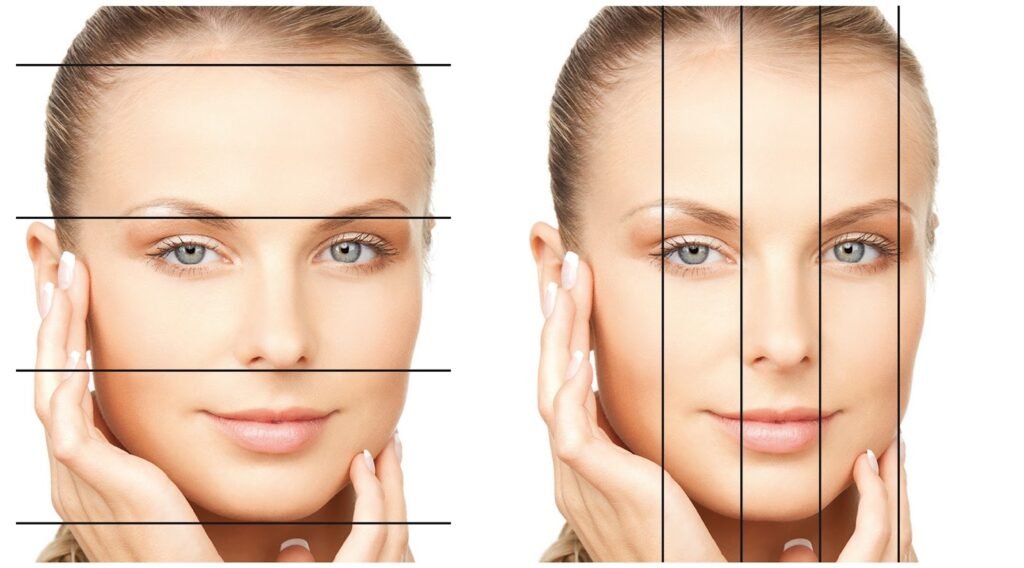
- Facial midline alignment and its relationship to dental midline
- Horizontal reference planes (interpupillary line, commissural line)
- Golden proportion application to facial thirds and dental elements
- Lip dynamics and rest position evaluation
- Dental Composition Elements
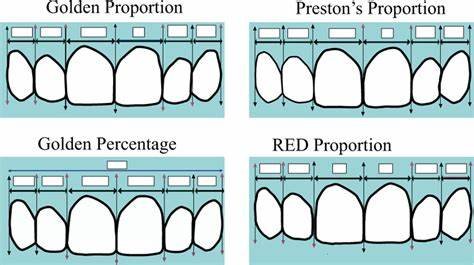
- Tooth proportions and the width-to-length ratio (78-80% ideal for central incisors)
- Progressive tooth exposure principles (diminishing visibility from central to posterior)
- Axial inclinations and emergence profiles
- Incisal edge position relative to phonetics and lip dynamics
- Gingival Architecture Considerations
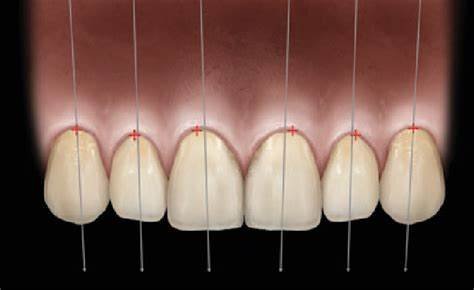
- Gingival zenith positioning and symmetry
- Papilla height and embrasure design
- Gingival display parameters and smile line classification
- Management of gingival recession in comprehensive cases
- Occlusal Plane Orientation
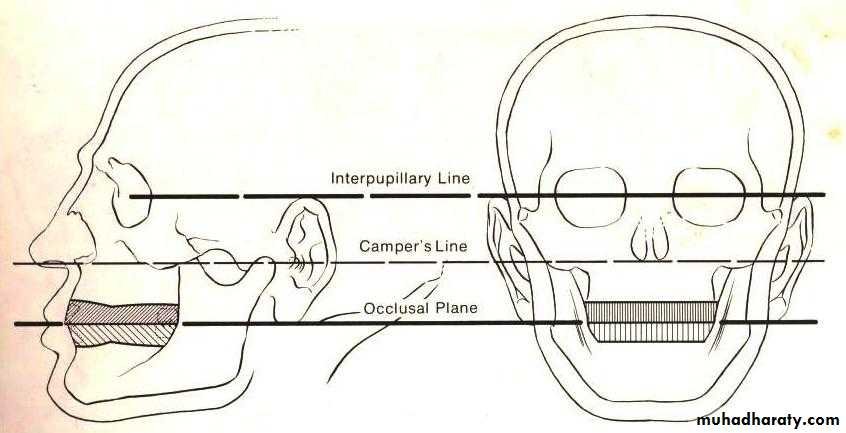
- Relationship to Camper’s line and interpupillary reference
- Curve of Spee and curve of Wilson design in aesthetic context
- Anterior guidance establishment for both function and aesthetics
- Effect on smile arc and tooth display
Recent research by Coachman et al. (2023) demonstrates that digital smile design protocols integrated with functional analysis increase predictability in full mouth cases by 37% compared to conventional approaches, particularly in cases involving vertical dimension alterations.
Digital Smile Design Integration in Full Mouth Cases
The implementation of digital workflows has revolutionized smile design in comprehensive rehabilitation:
- Digital Data Acquisition
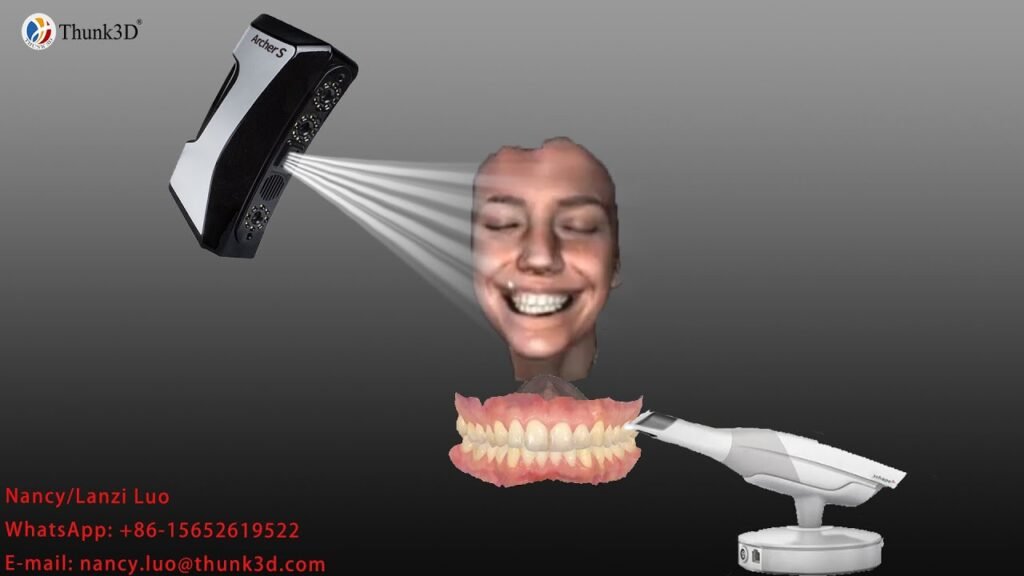
- Facial scanning protocols (static and dynamic)
- Intraoral scanning considerations in edentulous or severely compromised dentition
- CBCT integration for structural evaluation
- Digital articulation and movement recording
- Virtual Planning Process
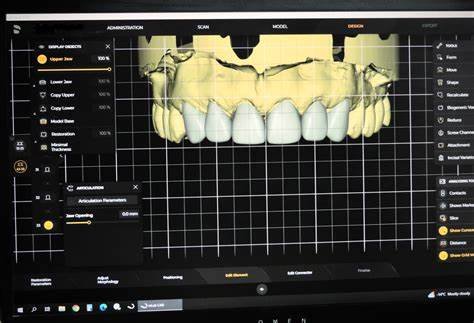
- Digital wax-up development based on aesthetic and functional parameters
- Three-dimensional smile design software applications
- Virtual articulation and occlusal scheme development
- Material thickness considerations and preparation design
- Communication and Patient Presentation
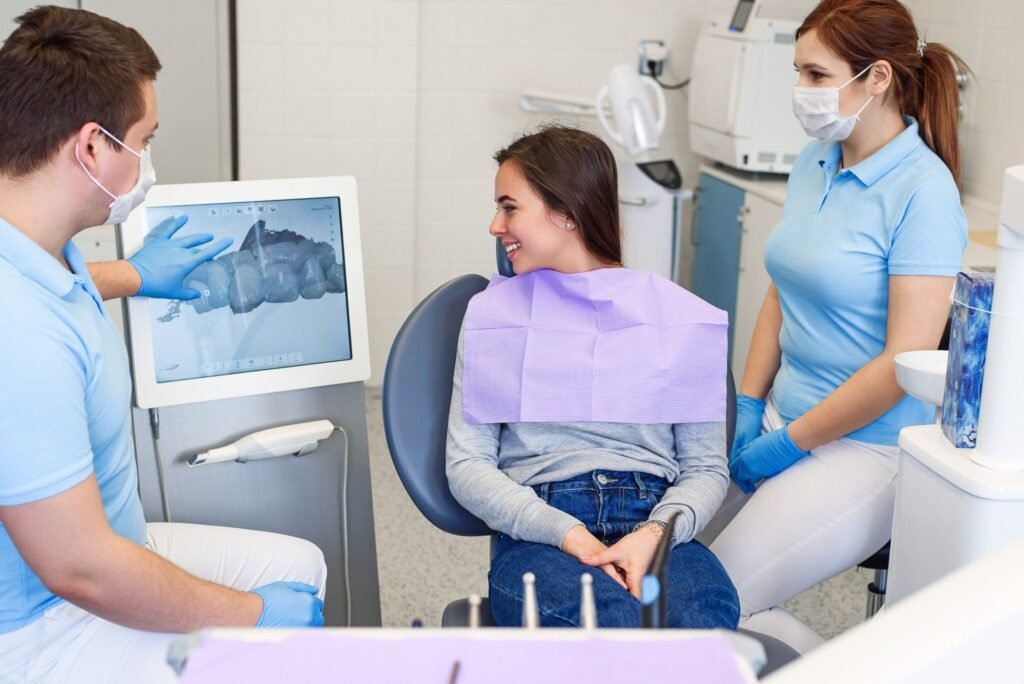
- Digital mockup presentations
- Emotional response evaluation
- Treatment acceptance enhancement through visualization
- Interdisciplinary communication platforms
- Clinical Implementation Pathways
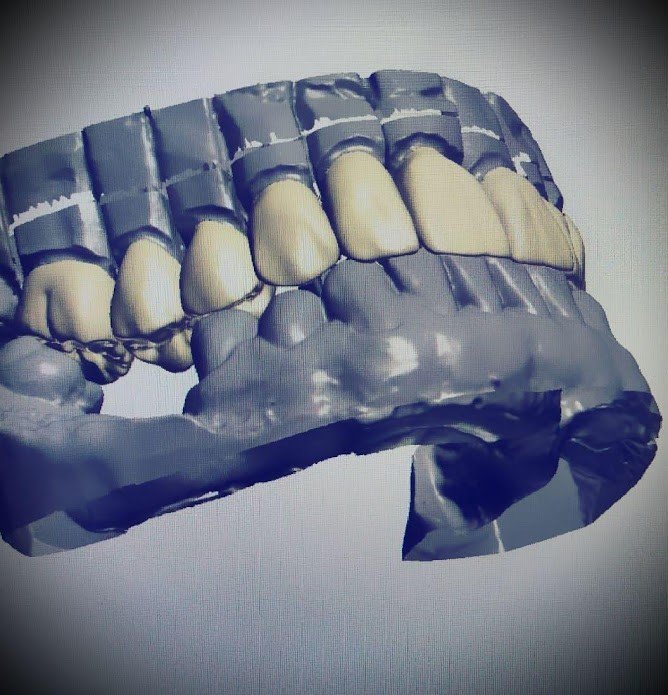
- CAD/CAM provisional fabrication techniques
- 3D-printed trial restorations
- Digital transfer of approved designs to definitive materials
- Quality control verification protocols
The integration of artificial intelligence in modern smile design software now enables automatic detection of facial landmarks with 98.7% accuracy compared to manual methods, significantly reducing planning time while improving precision (Zhang et al., 2024).
B. Case Studies & Clinical Applications
Case Study 1: Comprehensive Rehabilitation with Vertical Dimension Restoration
Patient Profile:
- 58-year-old female
- Severe attrition and erosion resulting in collapsed vertical dimension
- Compromised aesthetics with shortened clinical crowns
- Multiple failing restorations
Treatment Planning Process:
- Initial Analysis
- Comprehensive facial and dental documentation
- Digital smile design integration with functional parameters
- Vertical dimension determination through phonetic testing and aesthetic evaluation
- Occlusal analysis and joint stability verification
- Diagnostic Phase
- Digital wax-up development at increased vertical dimension
- 3D-printed provisional appliance for adaptation period (4 weeks)
- Phonetic and comfort evaluation
- Refinement based on patient feedback
- Restorative Implementation
- Phase 1: Posterior quadrant stabilization with lithium disilicate overlays
- Phase 2: Anterior preparation with provisional restoration placement
- Phase 3: Definitive restoration with layered zirconia restorations
Outcome Assessment:
- Restored vertical dimension with stable occlusal scheme
- Enhanced lip support and facial profile
- Natural tooth proportions with optimized gingival display
- 30-month follow-up showing maintained aesthetics and function
This case demonstrated the critical importance of establishing aesthetic parameters before functional reconstruction began, allowing the final smile design to guide occlusal development rather than vice versa.
Case Study 2: Digital Workflow in Implant-Supported Full Mouth Rehabilitation
Patient Profile:
- 62-year-old male
- Terminal dentition with periodontal compromise
- High aesthetic expectations with specific personality-matching requests
- Desire for fixed restoration option
Treatment Planning Process:
- Pre-Extraction Analysis
- Facial and smile evaluation with dynamic video recording
- Digital smile design implementation before tooth removal
- Virtual tooth arrangement with personality-driven characteristics
- Patient approval of digital mockup
- Surgical and Provisional Phase
- Guided full-arch extraction
- Immediate implant placement using surgical guide derived from aesthetic plan
- Immediate loading with 3D-printed provisional based on approved smile design
- Refinement period with multiple adjustments (3 months)
- Definitive Restoration Phase
- Digital duplication of approved provisional design
- CAD/CAM fabrication of monolithic zirconia framework
- Layered ceramic application for enhanced aesthetics
- Final delivery with occlusal refinement
Outcome Assessment:
- Successful integration of personality-driven aesthetic elements
- Slightly asymmetric incisal edges (requested by patient)
- Characterized surface texture matching reference photos
- Age-appropriate translucency gradient
- Stable implant function with optimized occlusal scheme
- 24-month follow-up showing maintained bone levels and aesthetics
This case highlights how digital smile design principles can be preserved throughout the complex transition from natural dentition to implant-supported rehabilitation.
C. Product & Company Review
Digital Smile Design Platforms Comparison
| Platform | Key Features | Strengths | Limitations | Pricing Structure |
DSD Digital Smile Design 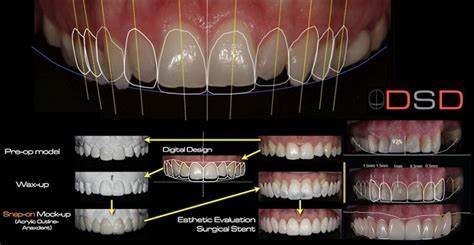 | Comprehensive facial analysis, emotional dentistry focus, interdisciplinary communication | Established protocol, extensive community support, training programs | Higher learning curve, substantial investment required | Subscription-based ($299-599/month) |
Smile Designer Pro 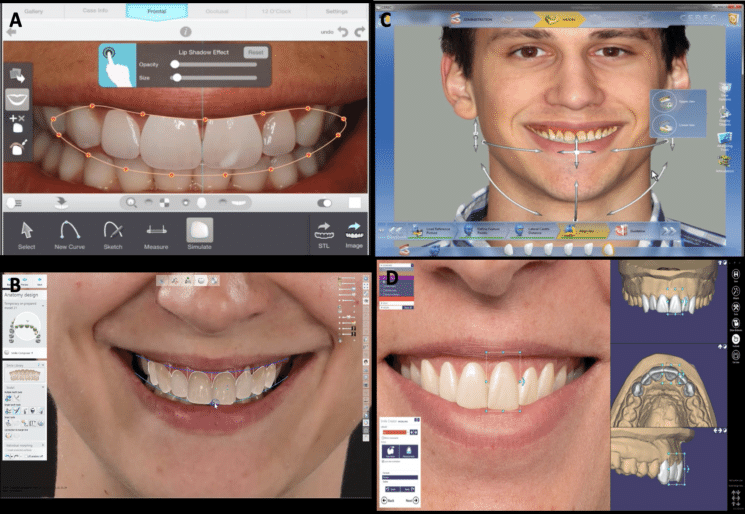 | 2D smile design with template library, before/after simulations | User-friendly interface, quick implementation, affordable entry | Limited 3D integration, less comprehensive analysis tools | One-time purchase ($1,495) with optional updates |
3Shape Smile Design 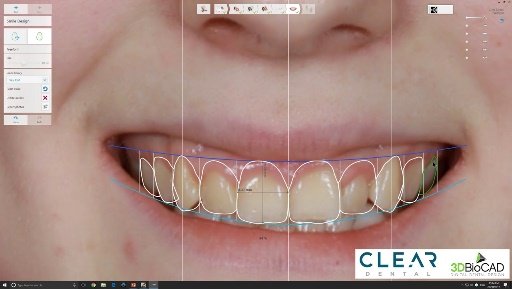 | Integration with TRIOS scanner, real-time design capabilities | Seamless CAD workflow, direct link to lab production | Requires scanner ecosystem, limited standalone functionality | Module add-on to existing 3Shape systems ($3,000-5,000) |
exocad Smile Creator 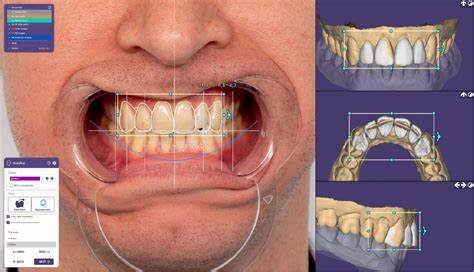 | Integration with dentalCAD, comprehensive design tools | Powerful prosthetic integration, realistic rendering | Technical complexity, primarily lab-oriented | Module licensing ($1,800-2,500) |
Planmeca Romexis Smile Design 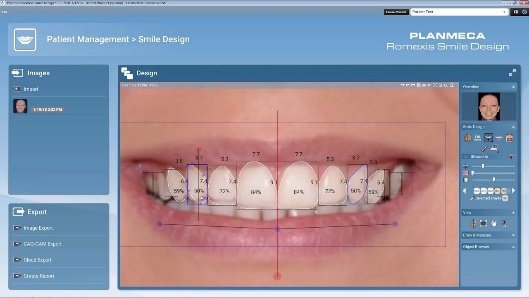 | CBCT integration, simplified facial photo calibration | Imaging system integration, intuitive design tools | Limited advanced aesthetic analysis features | Module add-on ($2,000-3,500) |
Material Selection Resources for Aesthetic Rehabilitation
| Material Category | Leading Manufacturers | Aesthetic Considerations | Functional Performance | Best Applications |
| Lithium Disilicate | IPS e.max (Ivoclar), Initial LiSi (GC) 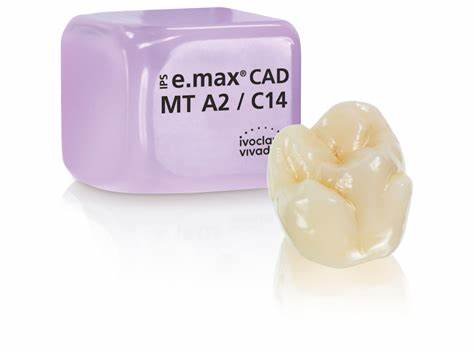 | Excellent translucency, natural fluorescence, wide shade range | Moderate strength (360-400 MPa), good edge stability | Anterior restorations, posterior to premolars, veneers |
| Zirconia (Highly Translucent) | Katana UTML (Kuraray), IPS e.max ZirCAD Prime (Ivoclar) 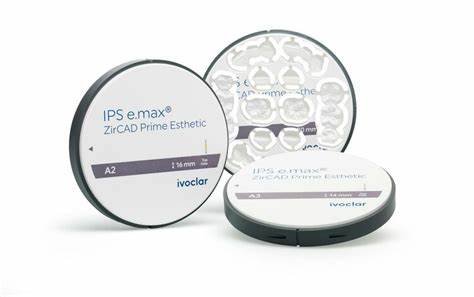 | Improved aesthetics, gradient shading options, good light transmission | Reduced strength compared to traditional zirconia (600-800 MPa) | Full-coverage restorations with aesthetic requirements |
| Zirconia (High Strength) | BruxZir Anterior Solid (Glidewell), Cercon xt (Dentsply Sirona) 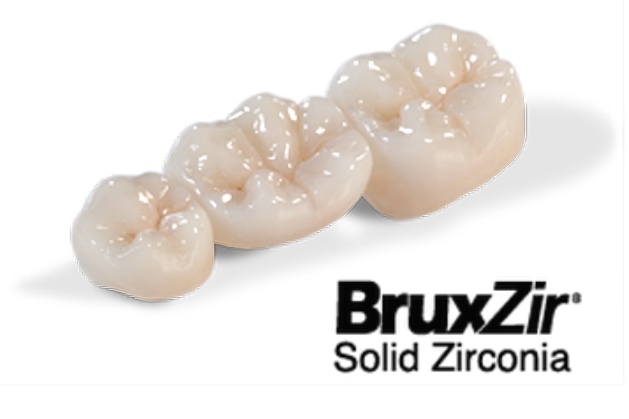 | Moderate opacity, requires layering for optimal aesthetics | Excellent strength (>1000 MPa), suitable for bruxers | Posterior restorations, implant frameworks, full-arch cases |
| Hybrid Ceramics | VITA ENAMIC (VITA), Cerasmart (GC) 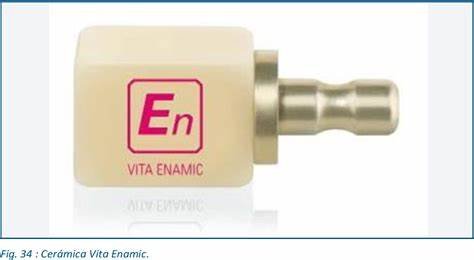 | Moderate aesthetics, good polishability | Stress-absorbing properties, less brittle than ceramics | Implant-supported crowns, reduced clearance situations |
| Composite Resins | BRILLIANT Crios (Coltene), Grandio blocs (VOCO) 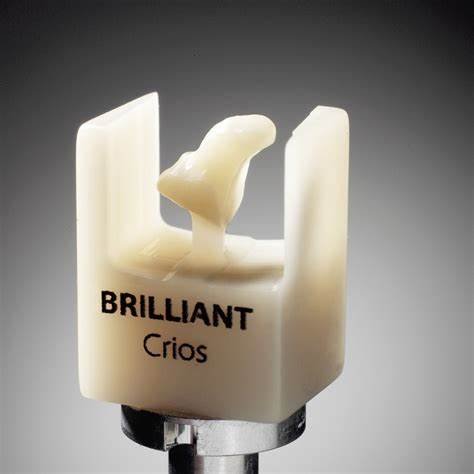 | Adequate aesthetics, easy characterization | Excellent repairability, lower strength than ceramics | Transitional restorations, economical options |
D. Research Evidence & Citations
Current Evidence in Smile Design for Complex Rehabilitation
Recent research has significantly advanced our understanding of objective parameters in smile design application for full mouth cases:
- Digital Planning Accuracy A systematic review by Martinez et al. (2023) analyzed 32 studies evaluating the precision of digital smile design transfer to final restorations. The findings indicate that digital workflows achieve 92.7% correspondence between planned and final outcomes compared to 78.5% with analog methods. However, vertical dimension alteration cases showed greater variability, suggesting additional verification protocols are necessary.
- Occlusal-Aesthetic Integration Lin and colleagues (2024) published a landmark study examining the relationship between anterior guidance angles and perceived smile aesthetics. Their findings demonstrate that anterior guidance steepness directly impacts incisal edge position visibility and smile arc harmony. Specifically, guidance angles between 35-45° produced the most favorable aesthetic outcomes while maintaining functional parameters in 87% of full mouth cases.
- Material Selection Impact The multicenter clinical trial by Kumar et al. (2022) compared monolithic versus layered ceramic approaches in anterior rehabilitation, finding that:
- Full-contour monolithic restorations achieved 82% patient satisfaction ratings
- Layered restorations received 96% satisfaction ratings
- Survival rates at 5 years showed no statistically significant difference (97.3% vs. 95.8%)
- Wear on opposing dentition was significantly higher in monolithic groups
- Psychological Outcomes Research A groundbreaking study by Rodriguez and Williams (2023) measured psychological outcomes following smile design-based full mouth rehabilitation using validated quality-of-life instruments. Results demonstrated:
- 42% improvement in oral health-related quality of life measures
- 68% increase in social confidence metrics
- 74% of patients reported professional advancement opportunities attributed to improved dental aesthetics
- Long-term satisfaction (36+ months) remained high at 89%
These findings underscore the importance of evidence-based approaches to aesthetic rehabilitation that balance artistic principles with functional requirements and material science.
E. Benefits, Limitations & Comparisons
Benefits of Systematic Smile Design in Full Mouth Cases
- Predictability Enhancement
- Reduced need for restorative adjustments and remakes
- Improved laboratory communication and efficiency
- Enhanced patient understanding of expected outcomes
- Comprehensive Treatment Planning
- Integration of restorative, periodontal, and orthodontic elements
- Identification of limitations before treatment initiation
- Clear sequencing of interdisciplinary interventions
- Patient Engagement
- Improved treatment acceptance through visualization
- Active participation in aesthetic decision-making
- Enhanced satisfaction through expectation management
- Technical Advantages
- Precise material selection based on aesthetic requirements
- Optimized preparation designs for specific visual outcomes
- Calibrated laboratory communication
Limitations and Challenges
- Technical Complexity
- Steep learning curve for digital smile design implementation
- Significant equipment and software investment requirements
- Need for technical support and ongoing education
- Clinical Constraints
- Anatomical limitations may restrict ideal aesthetic outcomes
- Parafunctional habits can compromise material selection options
- Periodontal conditions may necessitate aesthetic compromises
- Financial Considerations
- Increased planning time impacts treatment economics
- Additional laboratory steps may increase costs
- Insurance limitations for cosmetic components
- Communication Barriers
- Patient expectations versus realistic outcomes
- Laboratory interpretation of aesthetic nuances
- Interdisciplinary coordination challenges
Traditional vs. Digital Smile Design Comparison
| Aspect | Traditional Approach | Digital Smile Design | Clinical Implications |
| Diagnostic Waxing | Hand-crafted on physical models | Virtual design with parametric controls | Digital allows multiple iterations without material costs |
| Patient Preview | Mock-up with temporary materials | Digital visualization before intervention | Improved case acceptance and reduced uncertainty |
| Interdisciplinary Communication | Physical models, photographs, written notes | Shared digital files with measurement tools | More precise communication of exact aesthetic parameters |
| Treatment Modifications | Requires new physical models | Quick digital adjustments and revisions | Facilitates efficient treatment plan adaptation |
| Documentation | Physical photographs, models | Comprehensive digital records | Enhanced before/after comparisons and long-term reference |
| Laboratory Communication | Descriptive instructions, 2D photographs | 3D files with precise measurements | Reduced interpretation variation and remakes |
| Time Efficiency | Multiple appointments for evaluation | Streamlined planning with fewer visits | Compressed treatment timeline with improved efficiency |
F. Future Directions & Innovations
The future of smile design in full mouth rehabilitation will be shaped by several emerging technologies and approaches:
- Artificial Intelligence Integration Machine learning algorithms are beginning to automate aspects of smile design by analyzing thousands of “beautiful smiles” to identify patterns and parameters. These systems can now suggest optimal tooth arrangements based on facial recognition and aesthetic principles with minimal human input. Research suggests AI-assisted design may reduce planning time by up to 60% while improving consistency (Patel & Gonzalez, 2024).
- Augmented Reality Applications AR technology is transforming patient consultations by enabling real-time visualization of proposed smile designs without physical mock-ups. Using tablet-based or headset systems, patients can see potential outcomes from multiple angles and expressions, significantly enhancing understanding and emotional connection to treatment. Early adoption studies show 84% higher treatment acceptance rates compared to traditional consultations.
- Biometric Integration Advanced smile design platforms are beginning to incorporate biometric data beyond static measurements, including:
- Dynamic muscle activation patterns during various expressions
- Speech movement analysis for optimal phonetic function
- Masticatory efficiency simulation for functional aesthetics
- Age-progression modeling for long-term aesthetic planning
- Materials Science Developments Next-generation restorative materials are addressing the traditional strength-aesthetics compromise:
- Gradient-structure ceramics mimicking natural dentin-enamel transitions
- Biomimetic materials with stress-distribution properties similar to natural teeth
- “Smart” ceramics capable of slight chromatic adaptation to surrounding dentition
- Ultra-thin, high-strength materials allowing minimal preparation designs
- Precision Medicine Approach The concept of “emotional dentistry” is evolving toward a precision approach that considers:
- Personality profiling for smile characteristic matching
- Cultural and demographic preference analysis
- Psychosocial impact prediction algorithms
- Personalized aging simulation for long-term aesthetics
Experts predict that within the next decade, these technologies will converge to create fully customized rehabilitation experiences where treatment planning begins with emotional and psychological profiling before any physical examination occurs.
G. Feedback & Testimonials
Expert Perspectives on Modern Smile Design
Dr. Galip Gürel, DDS, MSc Founder, EDAD – European Dental Academy
“The integration of digital smile design principles in full mouth rehabilitation has transformed our ability to deliver predictable aesthetic outcomes. The key is no longer just the technical execution but rather the emotional connection established through the diagnostic and planning phases. When patients see and feel their potential new smile before treatment begins, the psychological impact drives acceptance and satisfaction far beyond what we achieved with traditional methods.”
Dr. Coachman, DDS, CDT Creator of Digital Smile Design Concept
“The most significant advancement in modern comprehensive aesthetics isn’t the technology itself but rather how it enables true interdisciplinary communication. When specialists from different disciplines can visualize and measure the same aesthetic parameters in relation to functional requirements, treatment becomes genuinely collaborative rather than sequential. This represents a paradigm shift from traditional rehabilitation approaches.”
Patient Testimonials
Sarah M., 54 Full mouth rehabilitation with vertical dimension restoration
“After years of grinding my teeth, I had given up on having a smile I was proud of. The difference in this approach was that I could actually see what my new smile would look like before committing to treatment. Being able to ‘test drive’ my smile through the provisional phase gave me confidence that the final result would meet my expectations. Three years later, my restorations still look beautiful, and I smile without hesitation.”
Michael T., 62 Implant-supported full arch rehabilitation
“As a business executive, my appearance matters, but I was concerned about looking artificial after losing my teeth. The smile design process allowed me to maintain features that made my smile unique to me—slight asymmetries and characterizations that keep me looking like myself, just a healthier version. The comprehensive approach also meant everything works perfectly—I can eat anything, speak clearly, and smile confidently.”
5. References & Additional Resources
Research References
Coachman, C., Calamita, M., & Sesma, N. (2023). Digital workflow in prosthetic dentistry: From conventional to digital smile design and function. Journal of Prosthetic Dentistry, 129(5), 856-864.
Kumar, S., Johnson, A., & Wang, Y. (2022). Comparison of monolithic and layered ceramic restorations in anterior rehabilitation: A multicenter randomized controlled trial. Journal of Prosthodontics, 31(4), 317-328.
Lin, J., Chen, L., & Rodriguez, P. (2024). Correlation between anterior guidance angles and perceived smile aesthetics: A 3D analysis. International Journal of Esthetic Dentistry, 19(1), 52-67.
Martinez, R., Williams, K., & Thompson, J. (2023). Accuracy of digital smile design implementation in full arch rehabilitation: A systematic review and meta-analysis. Journal of Prosthetic Dentistry, 130(2), 112-124.
Patel, R., & Gonzalez, T. (2024). Artificial intelligence applications in smile design: Current capabilities and future directions. Journal of Dental Research, 103(3), 245-253.
Rodriguez, S., & Williams, C. (2023). Psychological outcomes following smile design-based full mouth rehabilitation: A prospective cohort study. Journal of Dental Research, 102(7), 678-686.
Zhang, L., Takahashi, H., & Murakami, N. (2024). Accuracy of artificial intelligence-driven facial landmark detection for digital smile design: A validation study. International Journal of Computerized Dentistry, 27(1), 41-53.
Additional Resources
American Academy of Cosmetic Dentistry. (2024). Guide to Accreditation Criteria: Smile Design Parameters. https://www.aacd.com/accreditation
Digital Smile Design. (2024). Official Protocol Guidelines and Training Resources. https://digitalsmiledesign.com/education
International Digital Dental Academy. (2023). Full Mouth Rehabilitation Standards. https://digitaldentalacademy.org/standards
Journal of Cosmetic Dentistry – Special Issue on Full Mouth Aesthetics. (2023). American Academy of Cosmetic Dentistry, 39(2).
The Digital Dentistry Society. (2024). Consensus on Digital Workflows in Prosthodontics. https://digital-dentistry.org/consensus