Managing Midline Diastemas with Aesthetic Restorations: Contemporary Approaches in Cosmetic Prosthodontics
Should a midline space be closed by adding restorative material, moving teeth, or leaving it unchanged? Start with the patient’s preference and the cause of the space. Direct composite can offer an additive approach when tooth position, proportions, periodontal health and occlusion permit it. Ceramic veneers may be appropriate when a wider restorative need justifies their biological cost. Neither gap width alone nor a digital smile preview determines the treatment.
This clinician-focused guide connects diagnosis, design, material selection and maintenance. Its evidence consists of clinical studies, professional guidance and manufacturer documentation; the practical checkpoints below are a clinical planning synthesis, not a report of a new patient case.
Diagnose the space before designing its closure
A midline diastema is a space between the central incisors. It is not automatically a disease or an aesthetic defect. Ask whether the patient wants complete closure, partial reduction or no change, and document concerns about tooth shape, colour, appearance and function separately.
Record whether the space is longstanding, enlarging or recurrent after orthodontics. Examine tooth number and size, alignment, existing restorations, enamel available for bonding, periodontal support, mobility, frenum attachment and functional contacts. New migration, inflammation or mobility needs diagnosis and management before elective camouflage. Request radiographs only when clinically justified by the findings, rather than as an automatic cosmetic package.
Development matters. The AAPD policy on frenulum management explains that many spaces in primary and mixed dentitions close with maturation and that treatment must address etiology. It advises coordinating indicated frenulum surgery with orthodontic care and generally waiting for permanent canine eruption. A visible frenum alone is not a reason to perform a frenectomy or restore a child’s space.
Check the gingival embrasure as well as the incisal gap. Tarnow and colleagues’ study of 288 sites in 30 patients associated papilla presence with the contact-area-to-bone-crest distance. This observational relationship informs risk discussion; it does not guarantee papilla fill after changing a contact. Extending a restoration gingivally must still allow cleaning and respect the tissues.
Test proportions and function before choosing a material
Use facial and intraoral photographs, a scan or study cast, and a recorded bite to evaluate the proposal. Measure the existing central incisors and the available space. An equal addition to both teeth may be convenient, but the result must be checked against asymmetry, neighbouring teeth, root position and the patient’s preferred appearance. A golden-proportion diagram or a fixed width-to-height percentage should not become a treatment target by itself.
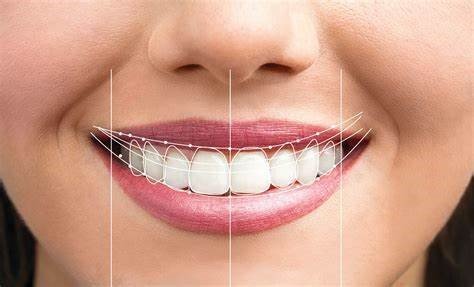
Compare an additive wax-up or digital design with the original records, then test an appropriate mock-up in the mouth when useful. Inspect frontal and oblique views, lip support, phonetics, contact shape, access for floss and movements of the mandible. A simulation cannot establish tissue health, adhesive reliability or clinical fit. If the trial makes the incisors excessively broad or introduces a bulky cervical profile, reconsider space distribution or orthodontic alignment before removing enamel.
- Observation: appropriate when the patient accepts the space and assessment finds no condition needing treatment.
- Orthodontic or combined treatment: consider when position, root alignment, arch relationships or tooth-size distribution make restorative closure alone unsuitable. Plan retention with the treating orthodontist.
- Direct composite: consider an additive design that permits isolation, a cleanable emergence profile and manageable contacts. Discuss staining, wear, fracture and future repair.
- Ceramic veneers: consider the whole restorative need, bonding substrate and required contour or colour change. Do not select veneers merely because a space exceeds a particular number of millimetres or the patient has bruxism.
Frese and colleagues’ five-year follow-up of 176 composite buildups supports additive correction in selected cases, while documenting events requiring repair. It is not a direct comparison proving that composite or ceramic is best for every diastema. Discuss local fees and likely maintenance using the actual treatment plan rather than universal cost or lifespan figures.
Choose restorative materials by indication and substrate
Composite filler labels do not rank clinical performance by themselves. The ADA overview of direct restorative materials notes that composite classifications overlap. Select a system indicated for the restoration, with appropriate handling, shade options and a compatible adhesive. Laboratory gloss, flexural strength or colour-change values from different tests cannot be converted into a reliable clinical league table.
For ceramic veneers, preservation of suitable enamel is an important planning objective. In a retrospective study of 580 veneers in 66 patients followed for up to 12 years, Gurel and colleagues found an association between preparation substrate and failure. This supports careful substrate assessment; it does not establish a universal reduction depth or promise a particular result in a new patient.
Identify the exact ceramic and fabrication route. A veneering porcelain intended for a supporting framework is not automatically a standalone veneer material. A pressed ceramic, a milled glass-ceramic and zirconia do not share one preparation or bonding recipe. The ADA’s indirect-material guidance distinguishes composition, processing and clinical indications. Use the chosen product’s current instructions for minimum dimensions, finishing and surface treatment.
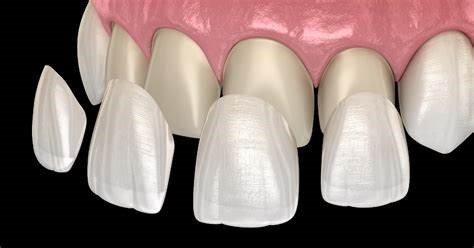
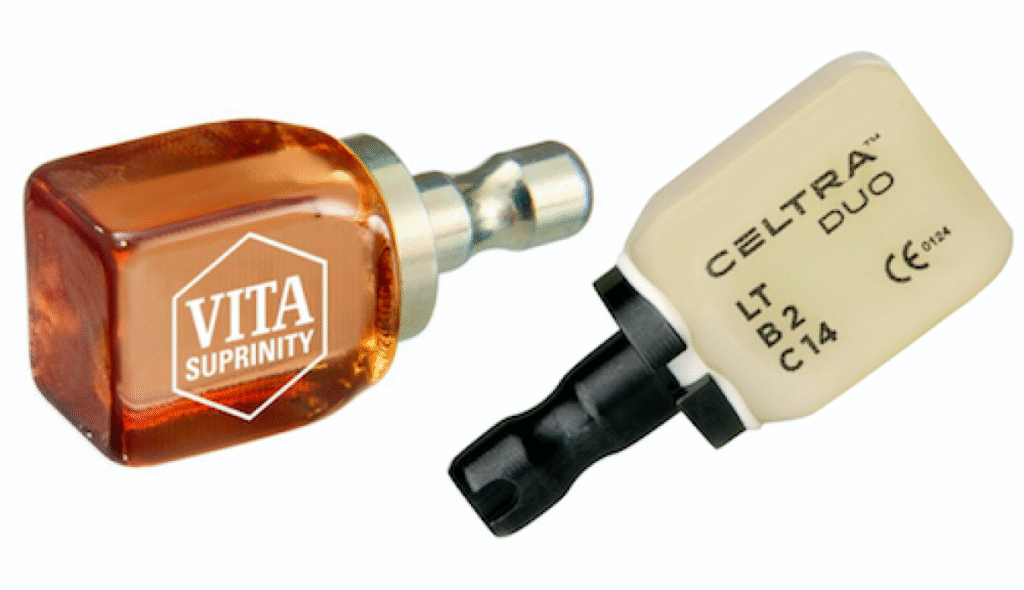
At try-in, assess seating, margins, proximal contacts and shade before bonding. Stop and resolve a fit or contour problem rather than relying on cement to compensate. Ceramic conditioning and tooth conditioning are separate steps. Verify the ceramic, etchant or primer, adhesive and cement as a compatible system; do not transfer a hydrofluoric-acid concentration, etching time or silane step from another ceramic. Record the products and processing instructions used.
Keep digital models, guides and restorations separate
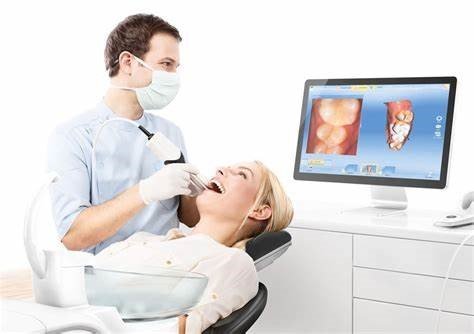
Scanning and CAD/CAM can help communicate a proposed shape and reproduce a design. They do not guarantee a fixed micrometre accuracy, chair-time reduction or patient-satisfaction improvement. Review scan completeness, proximal surfaces, margins where relevant, and bite alignment before design. If the source record is incomplete, acquire a better record instead of treating a polished rendering as verification.
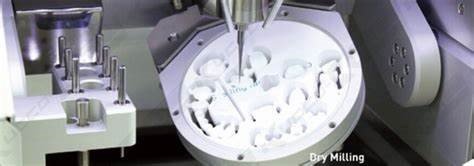
A diagnostic model stays outside the mouth. An intraoral mock-up or guide has its own contact and processing requirements. A provisional crown, bridge or veneer must be suitable for the restoration, its duration and loading. An occlusal splint is another device category. A resin’s ability to print all of these shapes does not establish that it is suitable for all of these uses.
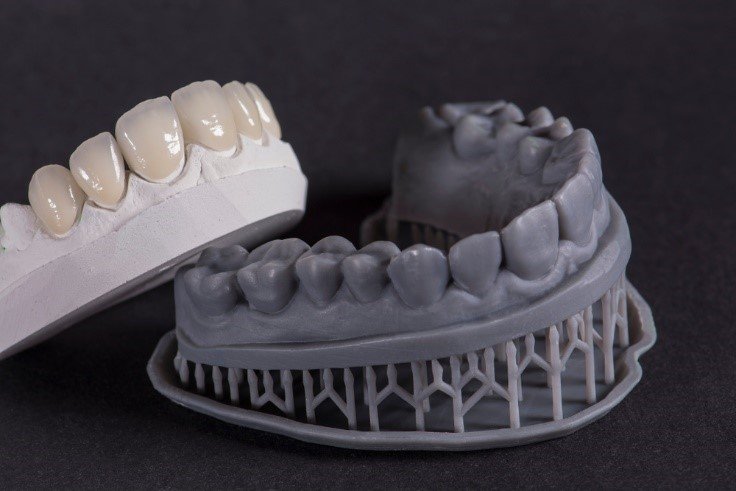
BioMed Amber: contact testing does not establish a crown indication
Formlabs documents BioMed Amber Resin for long-term skin contact exceeding 30 days and short-term contact with bone, tissue, dentin and mucosal membranes below 24 hours. Its product guidance does not assign specific intended uses to BioMed resins; application-specific biocompatibility and performance remain to be established. A skin-contact duration must not be substituted for an intraoral duration. These statements do not support recommending BioMed Amber for provisional diastema restorations.
The BioMed Amber Manufacturing Guide, PRNT-0102 Rev 05, prepared 31 October 2025, identifies validated hardware and processing requirements, including dedicated equipment for its biocompatibility workflow. Those manufacturing instructions do not create a restorative indication. Check the guide applicable to the actual material and equipment; do not borrow a process from another Formlabs resin.
KeySplint Soft Clear: verify the exact version and country labeling
Keystone’s current KeySplint Soft page lists Clear product 4220161 and describes USA indications for appliances such as mouthguards, nightguards, splints and repositioners. Its outside-USA list also includes bite planes and snoring appliances. These lists do not establish provisional crown or veneer suitability, and the outside-USA list is not proof of authorization in every country.
Product versions matter: the separately named KeySplint Soft Clear for Carbon Printers document describes a Carbon M-series workflow. Do not apply that document indiscriminately to another Clear product or printer. Before making a patient-worn device, obtain the current local instructions matching the bottle, verify the intended device and cumulative contact duration, and use its validated print, wash and cure process. A biocompatibility statement alone cannot supply a missing indication or contact limit.
For a provisional restoration, choose a material whose applicable labeling specifically covers that restoration and duration, then verify the complete manufacturing chain. Document resin identity and lot, printer and software profile, washing, post-curing, finishing and disinfection. Reject cracks, uncured residue, distortion or poor seating. Do not release a patient-worn device while its indication, contact duration or processing compatibility remains unresolved.
Deliver a cleanable restoration and plan its maintenance
For a direct composite approach, establish isolation and protect the adjacent tooth. Recheck the planned contact and emergence profile with the chosen matrix or index before bonding. Build the approved contour with material increments compatible with the product’s instructions, then finish and polish without damaging the adjacent enamel or gingiva. Confirm floss access, contact integrity and static and excursive contacts; if a contact binds or the contour traps plaque, correct it before accepting the result.
Light curing is a controlled clinical step. The ADA’s curing-light guidance emphasizes the material’s wavelength and energy requirements, the effect of tip position and exposure, and eye protection. Check the unit’s condition and output, keep the tip appropriately positioned, and follow the material’s instructions. A generic exposure time cannot stand in for a verified material-and-light combination.
Record baseline photographs and the restored surfaces, contacts, margins and periodontal condition. Arrange recall according to the patient’s risks and treatment needs. Review colour, surface quality, marginal integrity, fracture, symptoms, plaque retention and changes in occlusion. Recurrent space opening or a damaged restoration should trigger investigation of the cause as well as the restoration.
Maintenance is not synonymous with replacement. FDI guidance on repair recommends a patient- and tooth-specific assessment of defects and their causes. Depending on the finding, monitoring, polishing, local repair or replacement may be appropriate. Ceramic damage does not always require replacing the whole restoration, and an additive composite restoration should not be promised as perfectly reversible.
What can the evidence tell the patient?
Clinical follow-up supports conservative restorative options, but outcomes must be described with their definitions. Frese and colleagues reported five-year overall survival of 84.6%; all 30 restorations with unfavorable events or findings were repaired and remained in place, giving 100% functional survival. Those are different endpoints, not a guarantee of maintenance-free treatment. Read the study’s outcome definitions.
In a separate four-year retrospective evaluation by Korkut and Türkmen, survival did not differ significantly among the three composite systems studied. That result does not prove all composites are equivalent, but it does not support assigning a universal winner from filler category alone. Neither study supplies a head-to-head composite-versus-ceramic success percentage for every diastema patient.
Practical takeaway: diagnose first, test the proposed contours, preserve suitable tooth tissue, and choose materials for the actual restoration. Check the entire manufacturing or adhesive workflow, explain maintenance honestly, and reassess the underlying cause when problems arise. Digital tools are useful when they support those decisions; they do not replace them.
References and manufacturer guidance
- American Academy of Pediatric Dentistry. Policy on Management of the Frenulum in Pediatric Patients. Revised 2022; Reference Manual, 2025:80–85.
- Tarnow DP, Magner AW, Fletcher P. The effect of the distance from the contact point to the crest of bone on the presence or absence of the interproximal dental papilla. J Periodontol. 1992;63:995–996. doi:10.1902/jop.1992.63.12.995.
- Frese C, Schiller P, Staehle HJ, Wolff D. Recontouring teeth and closing diastemas with direct composite buildups: a 5-year follow-up. J Dent. 2013;41:979–985. doi:10.1016/j.jdent.2013.08.009.
- Gurel G, Sesma N, Calamita MA, Coachman C, Morimoto S. Influence of enamel preservation on failure rates of porcelain laminate veneers. Int J Periodontics Restorative Dent. 2013;33:31–39. doi:10.11607/prd.1488.
- Korkut B, Türkmen C. Longevity of direct diastema closure and recontouring restorations with resin composites in maxillary anterior teeth: A 4-year clinical evaluation. J Esthet Restor Dent. 2021;33:590–604. doi:10.1111/jerd.12697.
- American Dental Association. Materials for Direct Restorations.
- American Dental Association. Materials for Indirect Restorations.
- American Dental Association. Dental Curing Lights.
- FDI World Dental Federation. Repair of Restorations. Policy adopted September 2019.
- Formlabs. BioMed Amber Resin: contact categories and application responsibilities.
- Formlabs. BioMed Amber Manufacturing Guide. PRNT-0102 Rev 05; prepared 31 October 2025.
- Keystone Industries. KeySplint Soft: product variants, regional indications and links to current technical documents.
- Keystone Industries. KeySplint Soft Clear for Carbon Printers: USA instructions. Undated, separately named Carbon-specific document; verify the current applicable instructions before use.