Digital Mock-Ups in Aesthetic and Cosmetic Prosthodontics: Treatment Planning Excellence
Abstract
How can a digital smile proposal be checked before irreversible restorative treatment? A mock-up turns a proposed design into a preview that the patient and clinical team can discuss and, when appropriate, assess in the mouth. Physical, digital and combined workflows offer different ways to plan tooth form and communicate expectations. This article explains those workflows, distinguishes published clinical reports from comparative evidence, and identifies checks needed before transferring a design to definitive restorations. A pleasing preview does not guarantee clinical fit, long-term function or patient satisfaction.
Introduction & Background
In aesthetic and cosmetic prosthodontics, the proposed tooth form must be considered alongside biological and functional constraints and the patient’s priorities. A mock-up can make that discussion more concrete before irreversible procedures. Pimentel and colleagues’ clinical report describes combining digital planning with interim diagnostic mock-ups for porcelain laminate veneer treatment; it demonstrates a clinical approach rather than proving superiority over another method.
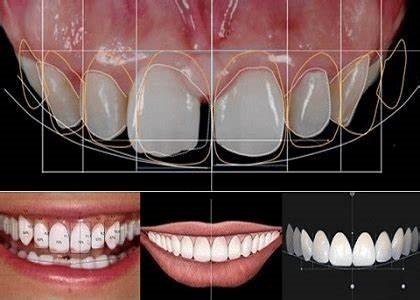
Conventional diagnostic wax-ups, direct mock-ups and digital designs can all contribute to treatment planning. The useful distinction is what each preview represents: a model-based proposal, an intraoral trial or an image-based simulation. Coachman and colleagues describe a 2D/3D smile-documentation process; this workflow description should not be read as a controlled comparison of treatment outcomes.
The design can be evaluated and revised before definitive treatment, but approval of a preview is only one checkpoint. Photography, scan alignment, fabrication and intraoral transfer can each introduce discrepancies. The final restoration still requires clinical verification; the cited case reports do not quantify reductions in adjustment or remake rates.
Clinical/Technical Overview
Types of Mock-Ups in Aesthetic Prosthodontics
Traditional Physical Mock-Ups
Physical mock-ups remain foundational in aesthetic treatment planning despite technological advances. The process typically begins with:
- Diagnostic Wax-Ups: Created in the laboratory on stone models, these provide the first three-dimensional representation of proposed changes. Technicians apply wax to models to simulate tooth additions, reshaping, or modifications.
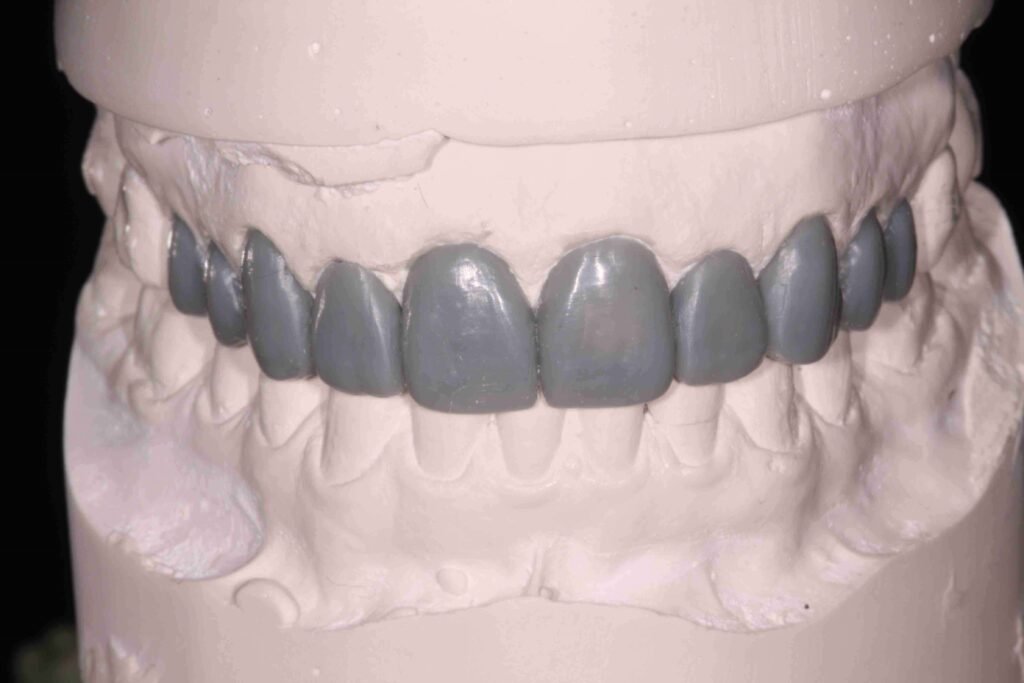
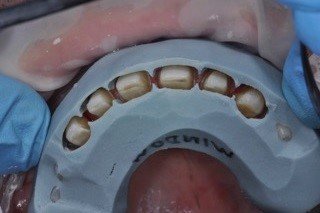
- Intraoral Mock-Ups: Transferred from the wax-up to the patient’s mouth using bis-acryl provisional materials in a silicone matrix or stent. This allows patients to experience the proposed changes in their own mouths.
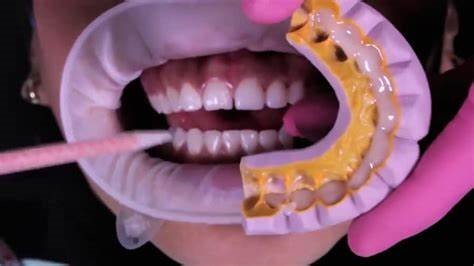
- Direct Composite Mock-Ups: Applied freehand directly to unprepared teeth using a clinician-selected material for a chairside preview. Direct freehand and index-guided resin techniques are different workflows; material suitability and removal must be assessed for the individual situation.
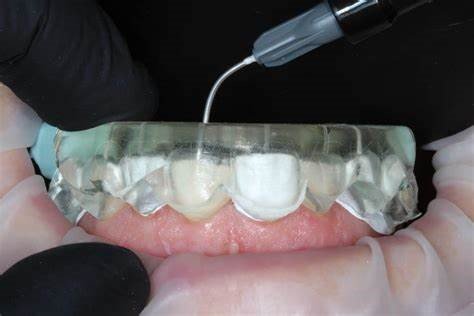
The illustration above depicts index-guided resin injection, a different technique from freehand direct application. It should not be used to infer a particular material protocol or clinical outcome.
Digital Mock-Ups
Digital tools offer alternatives for planning and visualization:
- Digital Smile Design (DSD): This protocol uses facial and intraoral photographs integrated with digital planning software to design smiles based on facial references, aesthetic principles, and functional requirements.
- CAD/CAM Mock-Ups: Digital designs created in software can be milled or 3D printed to produce physical models or provisional restorations, connecting a digital proposal with a physical try-in. Manufacturing and transfer accuracy must still be checked.
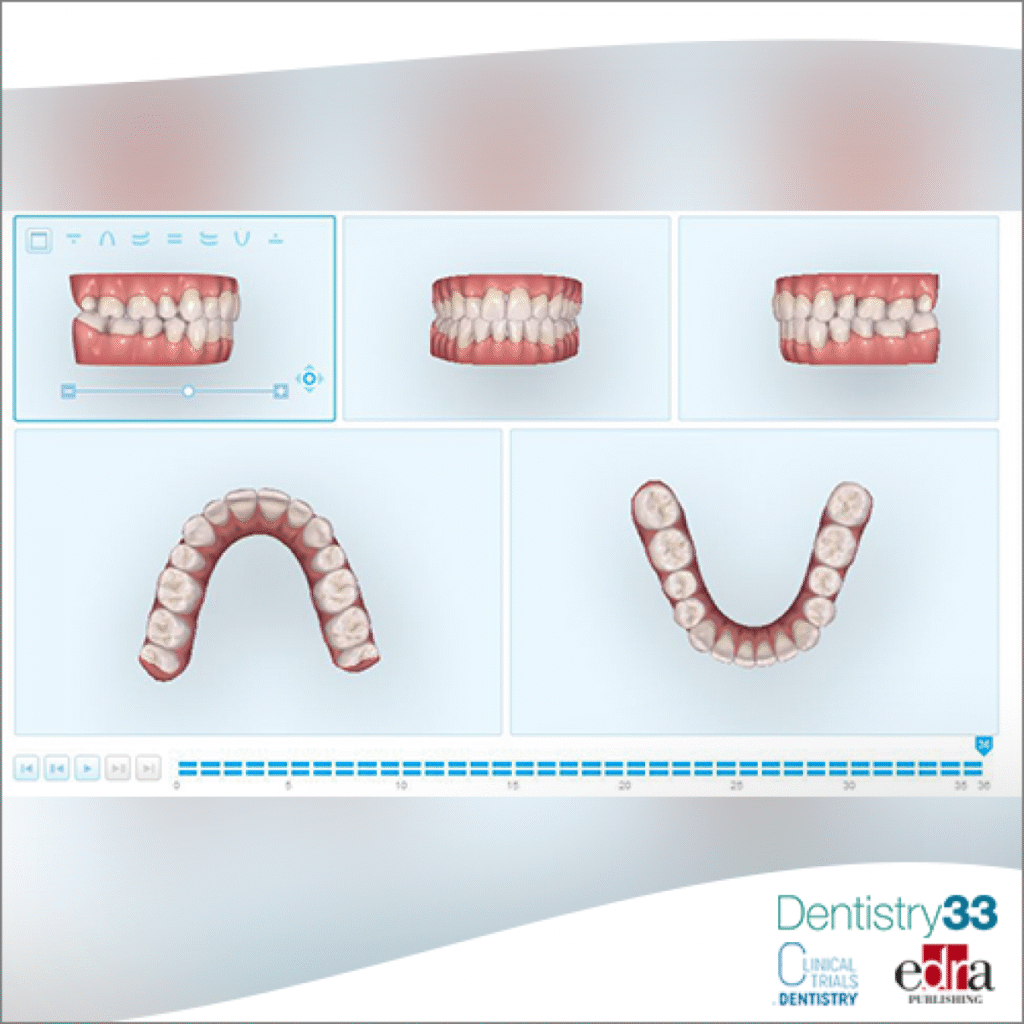
- Virtual Previews: Screen-based proposals can support discussion of appearance, but do not replace intraoral assessment or functional testing.
Clinical Implementation Process
The implementation of mock-ups follows a systematic approach:
- Comprehensive Assessment: Review clinical findings, photographs, relevant scans and functional records. Obtain radiographs only when clinically indicated rather than solely to create a cosmetic preview.
- Design Phase: Creation of the mock-up based on aesthetic principles, functional requirements, and patient desires.
- Patient Presentation: Demonstration of the mock-up to the patient, either digitally or intraorally.
- Refinement Phase: Modifications based on patient feedback and clinical evaluation.
- Treatment Template: A clinically verified design may guide subsequent restorative steps. Aesthetic preview, preparation guidance and functional provisionalization have different requirements; patient approval alone does not establish suitability for each use.
Published Clinical Reports & Clinical Applications
The following reports illustrate how a workflow was used in a particular patient or clinical context. They are not DDS patient records and do not establish a universal trial duration, predictable symptom relief or comparative success rate.
Veneer planning with digital design and diagnostic mock-ups
Pimentel et al. (2016) describe combining digital planning and interim diagnostic mock-ups for anterior porcelain laminate veneers. The report supports discussion of the relationship between the proposed design, patient communication and preparation planning. Its case-report design does not establish how much this approach reduces tooth preparation or improves satisfaction compared with another workflow.
Direct mock-up as a check on a virtual proposal
In Garcia et al. (2018), a 38-year-old man sought improvement of his maxillary incisors. A direct composite mock-up was used to reassess the virtual proposal before feldspathic porcelain veneer treatment. The teaching point is to evaluate the proposed form in the mouth rather than assume the image simulation will transfer unchanged. This report does not establish a standard 48-hour trial or an exact-match guarantee for definitive restorations.
A provisional trial in one rehabilitation report
Stanley et al. (2018) report treatment of a 47-year-old man with a chipped veneer, tooth wear, loss of vertical dimension and temporomandibular joint symptoms. Their workflow included a two-week provisional mock-up trial at the proposed vertical dimension. The authors described comfort and symptom improvement in that patient, followed by a treatment interruption for financial reasons and later definitive treatment. That observation does not prove that two weeks is sufficient for every patient or that a mock-up treats temporomandibular disorders. The authors explicitly call for further clinical comparisons with conventional workflows.
Product Examples and Selection Questions
Software and materials should be chosen for the intended task, available records and laboratory workflow. The examples below are not a comparative clinical ranking. Confirm current product availability, licence requirements and the exact material instructions for use before selection.
Digital smile design tools
DSD’s Motivational Mockup service offers model, guide and shell options linked to a treatment design. Its current product description restricts that motivational mock-up to aesthetic preview and photography and says it is not intended for provisionalization or functional testing. This distinction matters when applying case-report workflows to current products.
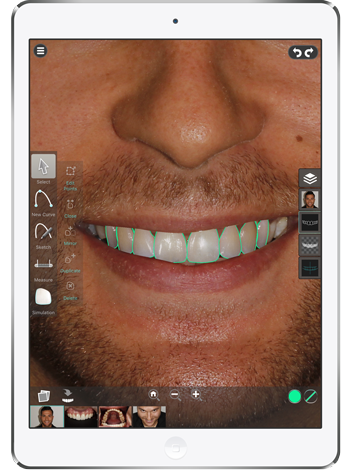
Smile Designer Pro is an example of a photo-based smile-planning interface. An image preview is not itself a manufactured restoration or evidence of clinical fit. Confirm the current product specification before relying on particular platform or export capabilities; no price or ease-of-use ranking is asserted here.
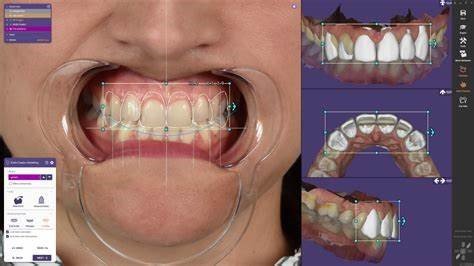
exocad Smile Creator combines patient photographs with 3D tooth data and supports editing a tooth setup. The manufacturer describes stand-alone and DentalCAD add-on options. Those software functions do not independently establish a clinical advantage or eliminate alignment and transfer errors.
Physical mock-up materials
The existing illustrations show Luxatemp Star, Protemp 4 and Structur 3 product packaging. They are product-identification examples, not a test of comparative aesthetics, fracture resistance, price or suitability for every mock-up. An aesthetic preview and a functional provisional restoration may require different material indications and clinical controls.
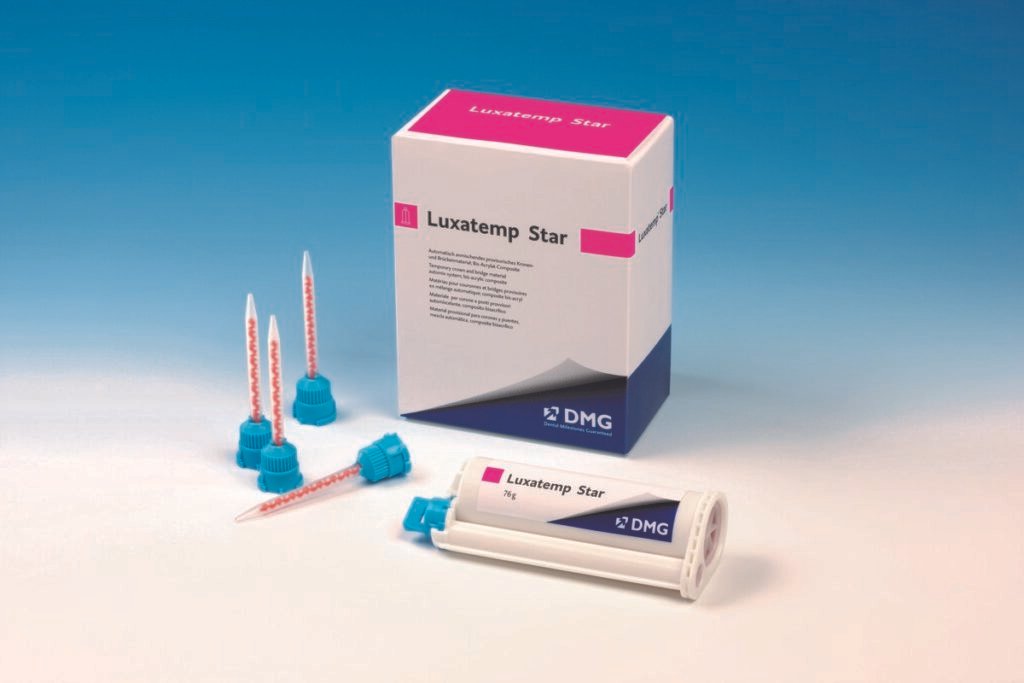
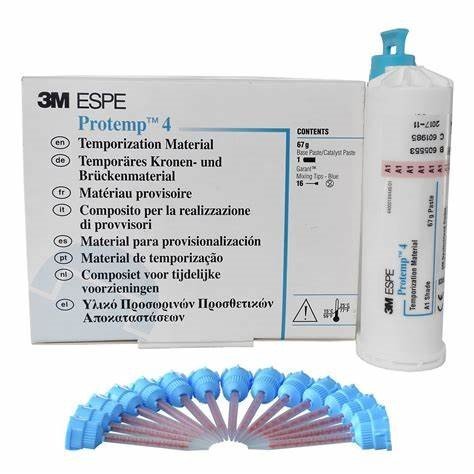
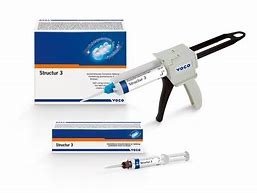
Consult the exact version and market-specific instructions from DMG, 3M and VOCO for the selected product. Do not transfer curing, removal, wear-duration or processing instructions between product families.
Comparing Workflows Without Assuming a Winner
A useful comparison starts with the intended endpoint. A diagnostic model permits model-based inspection; an intraoral mock-up permits an in-mouth preview; a digital design can be revised and shared. Each may be combined with the others. The descriptions below are practical workflow considerations, not measured accuracy or cost rankings.
| Approach | What it provides | What still needs checking |
|---|---|---|
| Diagnostic wax-up | A model-based proposal for tooth form | How the proposal relates to the face and how accurately it transfers to the mouth |
| Direct mock-up | A chairside physical preview | Material suitability, contours, removal and whether the trial answers the clinical question |
| Digital design with physical transfer | A revisable digital proposal and a manufactured model, index or trial | Record alignment, manufacturing and intraoral transfer discrepancies |
| Virtual preview alone | An image-based discussion of proposed appearance | It does not directly test intraoral fit, phonetics or function |
Research Evidence & Citations
Two published clinical reports illustrate how digital smile design and mock-ups can be used in treatment planning: Meereis et al. and Garcia et al.
Meereis et al. (2016) described a clinical case in which digital smile design was used to assist diagnosis and planning for esthetic rehabilitation, with a two-year follow-up.
Garcia et al. (2018) described combining digital smile design with a direct mock-up for anterior porcelain laminate veneer planning. These case reports illustrate treatment workflows and do not establish comparative effect sizes for patient involvement, tooth-structure preservation, treatment acceptance, or adjustment and remake rates.
Broader reviews by Cervino et al. (2019) and Omar and Duarte (2018) discuss applications and smile-design parameters. They provide context, but they should not be treated as a head-to-head trial establishing a universal accuracy, cost or satisfaction ranking for these workflows.
Benefits, Limitations & Comparisons
Benefits of Mock-Ups in Treatment Planning
- Enhanced Communication: Visual representation bridges the gap between clinical terminology and patient understanding.
- Planning Reference: Provides a proposal for subsequent treatment steps, subject to clinical verification.
- Preparation Planning: Can help visualize proposed restorative volume; conservative treatment still depends on the indication, remaining tissues and material requirements.
- Patient Involvement: Gives patients a concrete proposal to discuss, while acknowledging that acceptance and satisfaction cannot be guaranteed.
- Earlier Review: May reveal aesthetic or functional concerns before definitive treatment; a preview does not exclude all clinical risks.
- Laboratory Communication: Provides clear direction to technicians for fabricating final restorations.
Limitations and Challenges
- Time Investment: Quality mock-ups require additional appointments and laboratory time.
- Cost Considerations: Digital systems and laboratory wax-ups add to treatment expenses.
- Material Limitations: Physical mock-ups cannot perfectly replicate the optical properties of final ceramic restorations.
- Technical Expertise: Digital systems require training and experience to utilize effectively.
- Patient Expectations Management: Mock-ups may create unrealistic expectations if limitations are not properly explained.
Traditional vs. Digital Approaches
Physical mock-ups and digital designs answer different questions. Neither is universally more accurate or efficient: results depend on record quality, the selected technique, operator experience and the endpoint being assessed. A comparison of screen appearance cannot establish the fit or durability of a restoration.
A combined workflow can be useful when digital planning and an intraoral trial each address a relevant uncertainty. The decision should follow the patient’s clinical needs, not an assumption that adding digital steps always improves treatment.
Future Directions & Innovations
Automated design, more realistic previews and improved integration of facial and dental records are areas of ongoing development. For example, exocad’s current documentation describes AI-assisted facial-feature detection and preview functions. These are software capabilities, not validation of an ideal smile formula or long-term clinical outcome.
Claims about haptic smile previews, biomechanical prediction or improved restoration longevity require device-specific validation. A visual simulation should not be presented as measured occlusal force, tissue response or a forecast of treatment success.
Conclusion
Mock-ups are planning and communication tools whose value comes from the question they help answer before definitive treatment. A digital proposal, diagnostic wax-up and intraoral trial can be used separately or together, with each transfer checked against the patient’s clinical situation.
Published case reports support the feasibility of these workflows. They do not establish universal superiority, a standard trial duration or guaranteed patient satisfaction. The practical priority is a realistic preview, informed discussion of limitations and verification of the definitive restoration.
References & Additional Resources
- Meereis CTW, de Souza GBF, Albino LGB, et al. Digital smile design for computer-assisted esthetic rehabilitation: Two-year follow-up. Oper Dent. 2016;41(1):E13-E22. https://doi.org/10.2341/14-350-S
- Garcia PP, da Costa RG, Calgaro M, et al. Digital smile design and mock-up technique for esthetic treatment planning with porcelain laminate veneers. J Conserv Dent. 2018;21(4):455-458. https://doi.org/10.4103/JCD.JCD_172_18
- Coachman C, Calamita MA, Sesma N. Dynamic documentation of the smile and the 2D/3D digital smile design process. Int J Periodontics Restorative Dent. 2017;37(2):183-193. https://doi.org/10.11607/prd.2911
- Pimentel W, Teixeira ML, Costa PP, Jorge MZ, Tiossi R. Predictable outcomes with porcelain laminate veneers: a clinical report. J Prosthodont. 2016;25(4):335-340. https://doi.org/10.1111/jopr.12413
- Stanley M, Paz AG, Miguel I, Coachman C. Fully digital workflow, integrating dental scan, smile design and CAD-CAM: case report. BMC Oral Health. 2018;18:134. https://bmcoralhealth.biomedcentral.com/articles/10.1186/s12903-018-0597-0
- Cervino G, Fiorillo L, Arzukanyan AV, et al. Dental restorative digital workflow: digital smile design from aesthetic to function. Dent J. 2019;7(2):30. https://www.mdpi.com/2304-6767/7/2/30
- Omar D, Duarte C. The application of parameters for comprehensive smile esthetics by digital smile design programs: A review of literature. Saudi Dent J. 2018;30(1):7-12. https://doi.org/10.1016/j.sdentj.2017.09.001
- Digital Smile Design. Motivational Mockup Design: product scope and restrictions.
- exocad. Smile Creator product overview and Smile Creator documentation.
- Additional Resources:
- American College of Prosthodontists: https://www.prosthodontics.org
- International Journal of Esthetic Dentistry: https://www.quintessence-publishing.com/deu/en/journals/ijed
- Digital Smile Design Academy: https://digitalsmiledesignacademy.com
- Journal of Prosthodontic Research: https://www.sciencedirect.com/journal/journal-of-prosthodontic-research
- International Journal of Computerized Dentistry: https://www.quintessence-publishing.com/deu/en/journals/ijcd
- Dentistry Journal – Digital Dentistry Special Issue: https://www.mdpi.com/journal/dentistry/special_issues/digital_dentistry