Digital Color Matching and Shade Analysis in Esthetic Dentistry
Can a digital shade reading guarantee the color of the finished restoration? Digital shade selection can supplement visual assessment and improve communication with the laboratory. Spectrophotometers measure color, while photographs, scanner color tools and smile simulations serve different purposes. Results depend on the device, acquisition conditions and restorative material. A smile preview can help discuss shape and appearance, but it does not guarantee the final shade or treatment outcome.
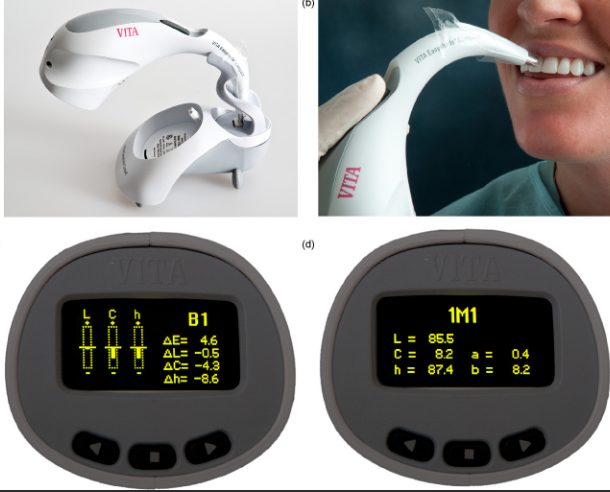
VITA shade-measurement hardware and displayed readings are illustrated. This image identifies a measurement workflow; it does not establish the shade or clinical outcome of a DDS patient.
Start by identifying what the tool measures
Use a calibrated device according to its instructions, repeat measurements where appropriate, and communicate the shade record alongside clinical photographs and relevant restorative information. Keep instrument-based shade measurement separate from visual smile simulation. AI-assisted image analysis should be assessed for the exact product and workflow; the presence of AI does not by itself establish accuracy.
What does the clinical evidence show?
A clinical comparison in 10 patients found better shade agreement and a preference for spectrophotometrically matched metal-ceramic crowns in that particular workflow. Another clinical comparison in 20 participants found that neither visual matching nor the tested colorimeter reliably assured an acceptable color match. These findings concern different devices and methods; they do not establish that all digital or AI tools outperform visual assessment.
How should a smile simulation be explained?
Photo-based smile simulations can support discussion of tooth shape and arrangement before treatment. The official 3Shape TRIOS Smile Design documentation describes a photo-based smile-design workflow. A photograph simulation is not automatically augmented reality or an objective shade measurement. Manufacturer documentation establishes features, not improved clinical outcomes.
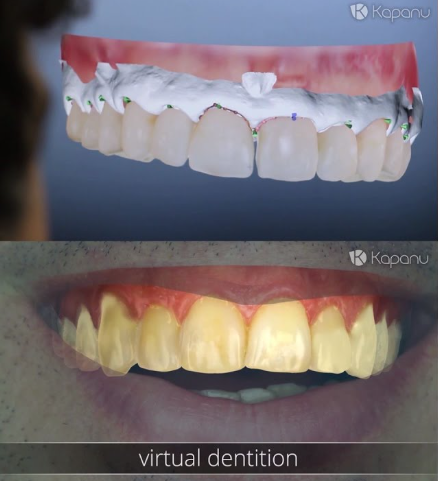
The existing image shows a Kapanu-labeled virtual-dentition visualization. It is an illustration of digital visualization, not a comparison study or evidence that the final restoration will match the preview.
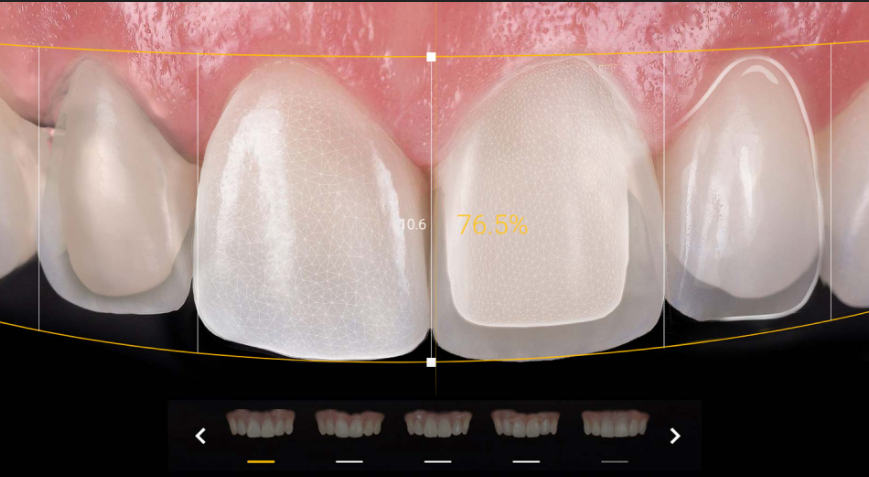
A digital tooth-shape visualization with an on-screen proportion marker is shown. The displayed percentage is part of the interface illustration; it is not a shade-accuracy or treatment-success rate.
What should the clinician and laboratory verify?
- For an esthetic crown, combine instrumental measurements with controlled visual assessment and clear laboratory communication.
- Record which device or method produced the shade information and the relevant acquisition conditions.
- Distinguish a measured color value from a visualization of tooth shape, arrangement or appearance.
- Verify the finished restoration clinically rather than treating a device reading or virtual preview as a guarantee.
These are DDS educational interpretations and workflow examples, not documented patient cases or evidence of higher treatment-acceptance rates.
Which device function are you comparing?
VITA Easyshade V is an example of an instrument-based shade-measurement system. Check the exact model and current instructions when comparing capabilities. Smile visualization tools answer a different planning question. Do not label a product as an AI measurement or AR system without documentation for the specific product and version.
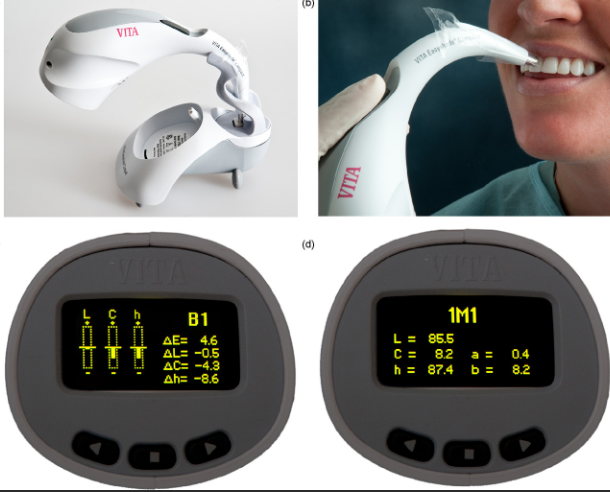
A displayed shade reading is one part of the clinical record. Device appearance and an example reading do not establish comparative accuracy or predict a finished restoration.
Benefits, limitations and practical conclusions
Potential benefits include structured color records and clearer laboratory and patient communication. Limitations include equipment cost, training, acquisition conditions and imperfect translation from a measured tooth color to a finished restoration. Digital readings and simulations still require clinical verification. Reductions in remakes or improvements in satisfaction should be claimed only when supported for the specific workflow.
AI-assisted shade analysis and interactive visualization continue to develop. Validation should assess the finished restoration and patient-relevant outcomes, not only agreement with a device reading. Digital shade tools are useful adjuncts when their measurement limits are understood: combine them with clinical assessment and clear laboratory communication, and present virtual smile previews as planning aids rather than promises.
Sources and further reading
- Paul SJ, Peter A, Rodoni L, Pietrobon N. Conventional visual vs spectrophotometric shade taking for porcelain-fused-to-metal crowns: a clinical comparison. 2004.
- Li Q, Wang YN. Comparison of shade matching by visual observation and an intraoral dental colorimeter. 2007.
- 3Shape: official TRIOS Smile Design support.